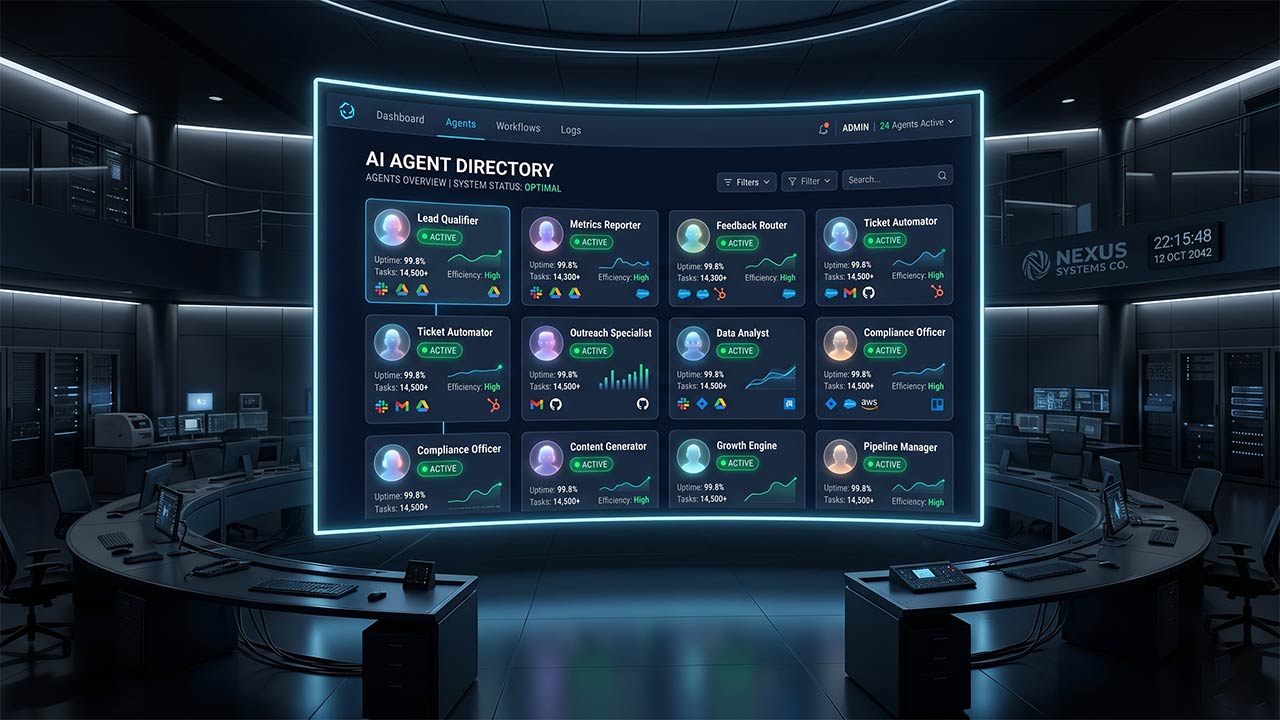
OpenAI launched "workspace agents" in ChatGPT yesterday. Powered by Codex, these persistent, autonomous agents run in the cloud, integrate with ChatGPT and Slack, and handle complex workflows across tools and teams. OpenAI describes them as "an evolution of GPTs," with existing Custom GPTs eventually convertible into full workspace agents. Continue Reading →


Managed Agents Are Here

Anthropic launched Claude Managed Agents in public beta at eight cents per agent runtime hour plus model usage fees. Developers get sandboxed containers, authentication, checkpointing, error recovery, session persistence, and end-to-end execution tracing: every piece of infrastructure that separates a demo from a production deployment, available as a set of composable APIs. Continue Reading →
OpenAI just launched Frontier, an enterprise platform that lets companies build, deploy, and manage AI agents across their organizations. OpenAI calls them "AI coworkers" to shift the budget conversation. If enterprises treat agents like employees, AI spending moves from IT to operations. OpenAI gains access to a different budget holder and a larger addressable market. Continue Reading →
eBay updated its User Agreement this week to explicitly ban third-party AI agents from making purchases without permission. The new terms, effective February 20, prohibit "buy-for-me agents, LLM-driven bots, or any end-to-end flow that attempts to place orders without human review." Continue Reading →

Agents Have a Standard Now

OpenAI, Anthropic, and Block quietly did something important yesterday: they donated core pieces of their agent technology into a new neutral nonprofit called the Agentic AI Foundation (AAIF), established under the Linux Foundation. Continue Reading →