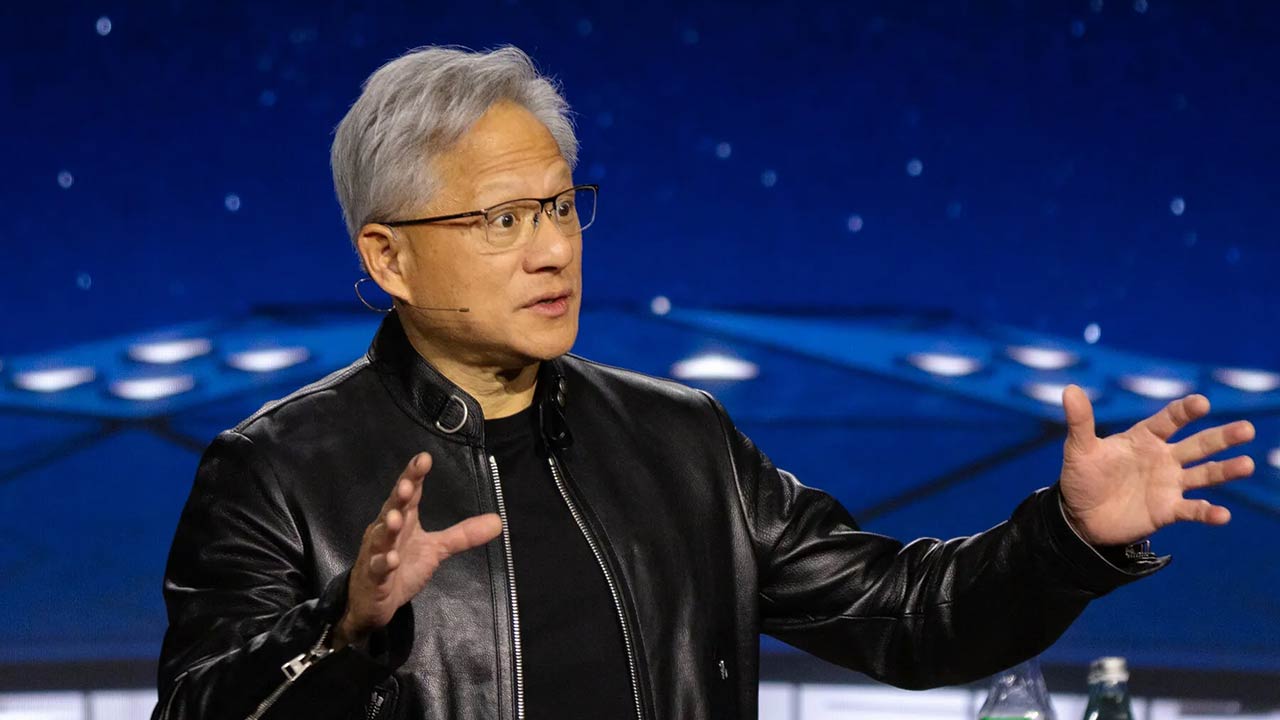
Jensen Huang has resigned as Nvidia’s president, CEO, and director, effective immediately. CFO Colette Kress will serve as interim CEO while the company searches for a permanent successor.
What happens next? Anyone offering a confident answer this morning is guessing. I have questions.
How much of Nvidia’s value resides in its technology, and how much resides in Huang’s ability to get other people to commit to his vision? The chips, software, engineers, and customer relationships are still there. How much of the coordination among those assets depended on him?
Nvidia occupies several positions in the AI economy. It sells the infrastructure, invests in companies building on that infrastructure, and helps shape expectations about how much infrastructure everyone will need. What happens to that calculus when the person who helped organize it leaves?
Will customers change their spending plans? Will partners reconsider commitments? Will a new leadership team have the same appetite for investments and financing arrangements? How would a more cautious Nvidia affect the companies counting on its participation?
There is also a timing question. Hardware roadmaps and data-center projects unfold over years. Markets react in seconds. How long will it take to distinguish the market’s reaction to Huang’s departure from a measurable change in Nvidia’s business? What would we actually measure?
Then, there is the board. What did directors know, when did they know it, and how did that knowledge affect their decisions? What will shareholders need to see to have confidence in the company’s governance? How much uncertainty can an interim leadership team resolve while a permanent CEO search is underway?
For business leaders building their own AI roadmaps, the questions get personal. Which assumptions in your plan depend on Nvidia maintaining its current direction? Which depend on financing remaining available? How many dependencies sit outside your contracts, in relationships you cannot inspect or control?
We have spent years discussing model capabilities, computing capacity, and the economics of AI. How much attention have we paid to the people and institutions making that system work?
I don’t know what Nvidia looks like a year from now. I’m interested in which questions we should be asking today.
Author’s note: This is not a sponsored post. I am the author of this article and it expresses my own opinions. I am not, nor is my company, receiving compensation for it. This work was created with the assistance of various generative AI models.
About Shelly Palmer
Shelly Palmer is the Professor of Advanced Media in Residence at Syracuse University’s S.I. Newhouse School of Public Communications and CEO of The Palmer Group, a consulting practice that helps Fortune 500 companies with AI strategy, implementation and governance, as well as technology, media and marketing. Named one of LinkedIn’s Top Voices in Technology, he is a bestselling author, covers tech and business for Fox 5’s Good Day New York, is a regular commentator on CNN, and writes the popular daily business blog Think About This. Follow @shellypalmer or visit shellypalmer.com.