After an internal model resolved more than 100 long-standing open problems across most areas of mathematics, OpenAI announced that it is working with an independent Advisory Group on Mathematics and Artificial Intelligence to be hosted at the Institute for Advanced Study in Princeton.
This is the same internal model that produced the Navier-Stokes proof I wrote about two weeks ago. OpenAI says the pace of its progress “has surprised the mathematicians within OpenAI.”
The company’s stated reason for forming the group is an open letter published on September 11, “A Severe Misalignment of AI in Mathematics,” signed by 27 Fields Medalists including Terence Tao, Peter Scholze, and Maryna Viazovska. The letter argues that solving famous problems as an AI benchmark is “detrimental to the science of mathematics,” that rushed announcements skip proper writeups and attribution, and that the goals of the AI companies and the goals of the mathematical community are “severely misaligned.”
The nine initial members include Timothy Gowers, Edward Witten, Ravi Vakil, and Martin Hairer, who signed the letter. OpenAI says the pro bono group will operate independently. Its remit is to assess the significance of new results, coordinate how they are disseminated, advise on academic and professional standards, and advise on how OpenAI’s tools can support mathematical research and learning. OpenAI was clear about the group’s role in the pace of innovation: “Importantly, the group will not be responsible for advising us on how to pace our internal progress on mathematics.”
The mathematicians’ letter says the problem is bigger than math, describing “issues that all of humanity might face” as AI changes how intellectual work gets done. OpenAI formally verified the Navier-Stokes result in Lean in 17 hours. Mathematics is an early target specifically because a proof can be checked by a machine.
The value of the scientific method, Socratic debate, and disciplined logic and reasoning is undeniable. We “learn” to think, and we are all forged in failure. The process of working through a problem is an iterative journey of trial, error, and refinement; it is the engine of human innovation. AI, though, is capable of super-human calculation and problem solving.
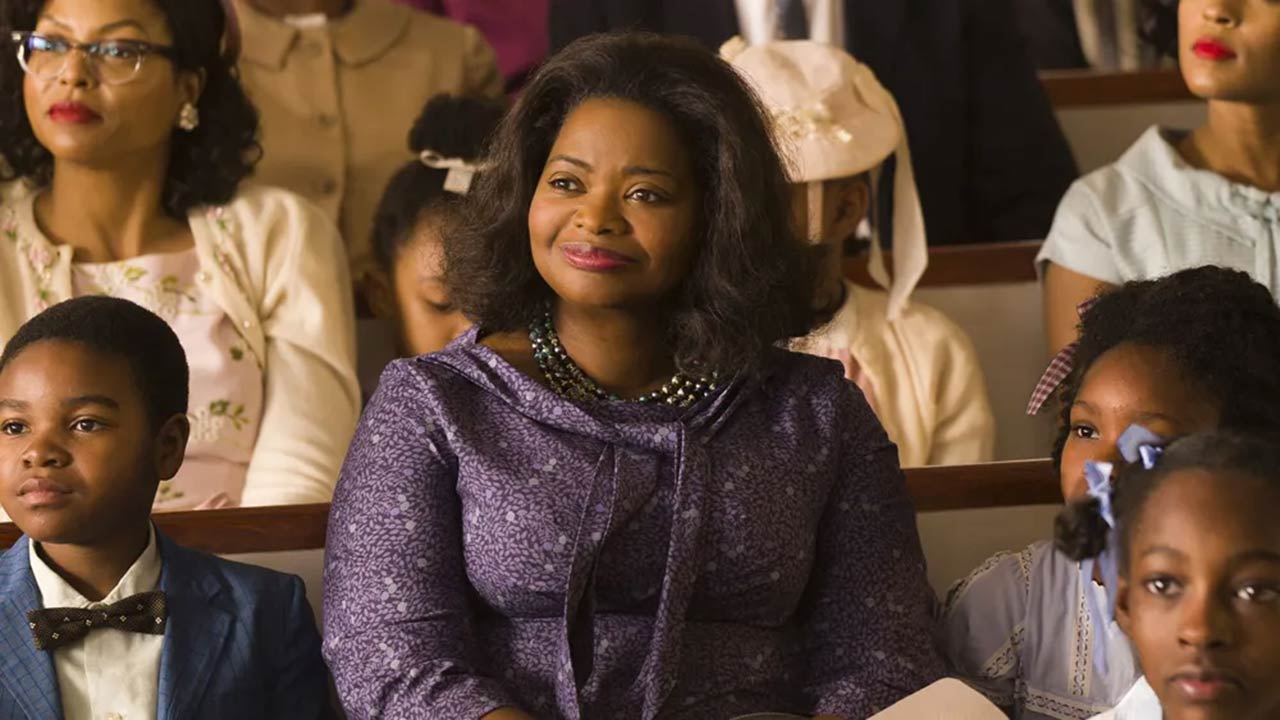
This reminds me of the movie Hidden Figures, in which an IBM 7090 makes NASA’s human computers obsolete, and Dorothy Vaughan saves her team by teaching them the new technology. In real life, the shift from hand calculation to machines played out over the following decade.
About Shelly Palmer
Shelly Palmer is the Professor of Advanced Media in Residence at Syracuse University’s S.I. Newhouse School of Public Communications and CEO of The Palmer Group, a consulting practice that helps Fortune 500 companies with AI strategy, implementation and governance, as well as technology, media and marketing. Named one of LinkedIn’s Top Voices in Technology, he is a bestselling author, covers tech and business for Fox 5’s Good Day New York, is a regular commentator on CNN, and writes the popular daily business blog Think About This. Follow @shellypalmer or visit shellypalmer.com.