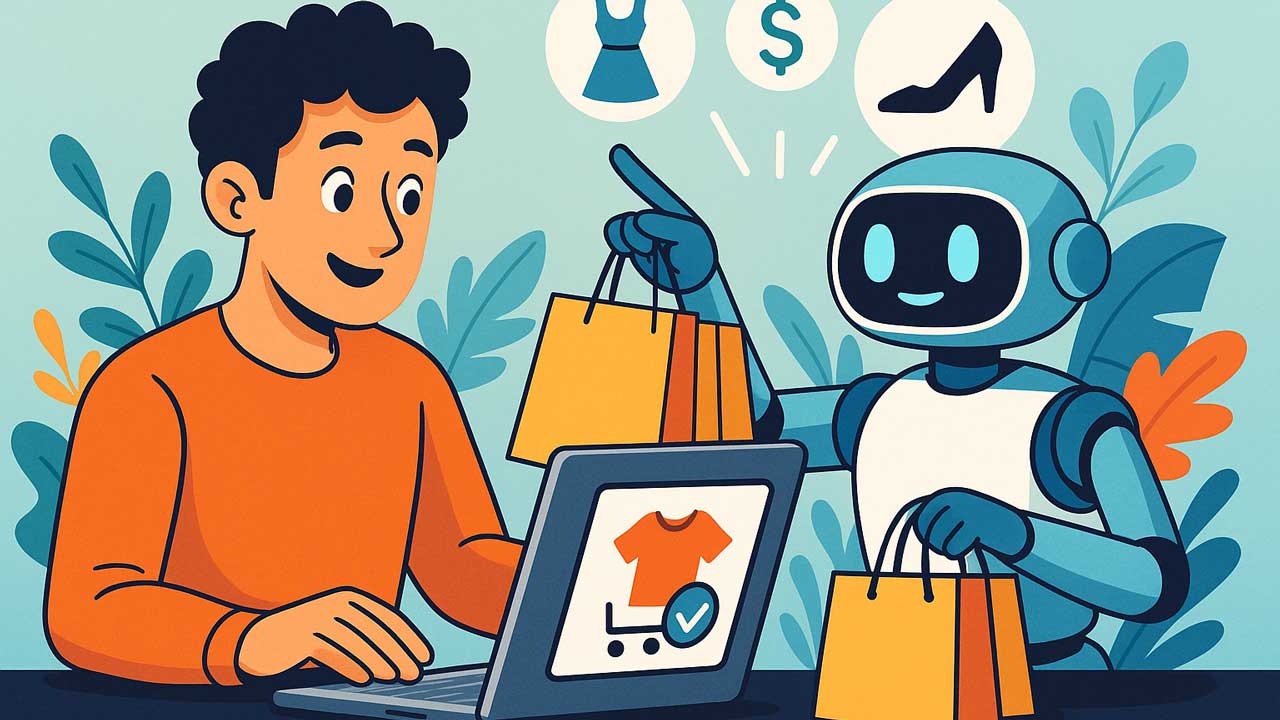
Get ready to market to bots! You hear it so often, it seems inevitable. But is there a near-term future where AI agents actively shop on our behalf? If there is, what will it take for us to get there?
The first thing we need to do is carefully define what we mean by “shop on our behalf.” Then, we have to understand how agents will get access to the data they need. Finally, we’ll need a compelling value proposition to incentivize (what can only be described as) an extraordinary behavioral change. Think about this…
Shoppers vs. Buyers
Shopping and buying are not the same thing. Shopping is a social act. We browse, compare, discuss, and debate. Buying is transactional. We decide, pay, and move on. AI agents will collapse this distinction. Once a system knows your size, budget, preferences, and brand loyalties, there is no reason for it to ask you before it makes a routine purchase. Subscriptions are already automated. The next step will be a hybrid of shopping and buying, where human input and agent autonomy vary by task as systems learn enough about us to get it right.
The Data
That’s where the problem starts. To act on your behalf, an AI agent needs data, lots of it. Some of that context can be inferred from your behavior: purchase history, search activity, or how long you linger on a page. Some of it can be explicitly provided in a “context profile,” a structured description of your preferences and constraints. Either way, the more data the agent has, the better it performs.
Who will we trust with that level of access? There are roughly 9 billion Google searches everyday, so Alphabet (Google, Gmail, Waze, Maps, YouTube, Meet, Google Pay, etc.) has most of the data it needs to provide exceptional value to consumers. Apple has your iPhone, iPad, Apple Watch data (PII, PHI, location, app usage, Apple Pay, etc.), Elon has your X data (including Starlink, X, Tesla telemetry and optical camera data), Meta has a massive social graph (Facebook, Instagram, etc). Amazon knows what we buy. There are several elite data sets out there. The owners of these data sets can do a pretty good job probabilistically inferring consumer preferences from existing profiles. This creates a structural advantage that startups will struggle to overcome.
But would you voluntarily hand over your complete personal and financial context to a third-party AI agent? Would you let it read your receipts, calendar, and health data in exchange for a perfectly tailored shopping experience?
The value proposition for consumers needs to be overwhelming to justify sharing the required data with new platforms. Free shipping isn’t enough. Better recommendations aren’t enough. The agent needs to demonstrably save time, money, or cognitive load in ways that existing platforms cannot. It needs to solve problems that only it can solve. And it needs to do this while earning trust in an environment where consumers are trending away from trusting AI results.
A Simple Exchange of Value
It sounds simple, but the devil is in the details. You give data, and the agent gives time, savings, and convenience. In practice, the trade-offs are less clear. If you buy directly through an AI assistant, who owns the customer relationship? The merchant? The platform? The model builder? When a bot shops for you, do you become the product… again?
We’re going to know soon enough. OpenAI is about to go wide with checkout and merchant integrations directly into ChatGPT. Google is embedding generative AI into every shopping surface it controls. Amazon already owns the purchase graph, logistics, and payments. Shopify is trying to keep merchants from losing direct access to customers. This is e-commerce disrupted.
As of this writing, people still like to shop. They enjoy discovery, comparison, and the feeling of control that comes with choosing. But this could change. As AI agents learn to understand context and intention, they will become better at buying than we are. Agents can be “taught” or “instructed” to be more or less rational or impulsive. And bots are infinitely scalable. When (if) we get there, we will be wondering (without knowing), “How much control did we willingly give up in exchange for convenience?”
Author’s note: This is not a sponsored post. I am the author of this article and it expresses my own opinions. I am not, nor is my company, receiving compensation for it. This work was created with the assistance of various generative AI models.
About Shelly Palmer
Shelly Palmer is the Professor of Advanced Media in Residence at Syracuse University’s S.I. Newhouse School of Public Communications and CEO of The Palmer Group, a consulting practice that helps Fortune 500 companies with AI strategy, implementation and governance, as well as technology, media and marketing. Named one of LinkedIn’s Top Voices in Technology, he is a bestselling author, covers tech and business for Fox 5’s Good Day New York, is a regular commentator on CNN, and writes the popular daily business blog Think About This. Follow @shellypalmer or visit shellypalmer.com.