
English Wikipedia just banned the use of large language models for writing or rewriting articles. The vote was 44-2. The policy passed a Request for Comment on March 20 and allows only two narrow exceptions: editors can use LLMs for basic copyediting of their own writing, and they can use LLMs to assist with translation. In both cases, the editor must verify the output for accuracy. Continue Reading →

AI Pays Wikipedia

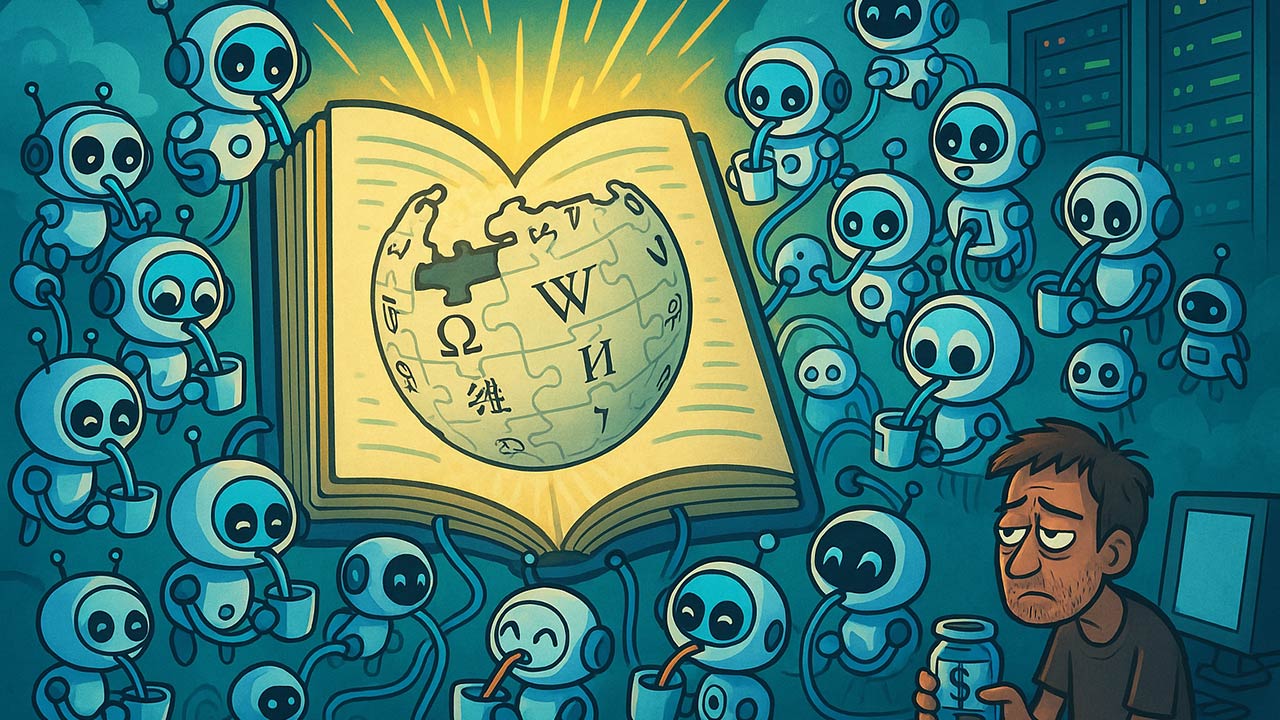
Wikipedia has signed deals with Amazon, Meta, Microsoft, Perplexity, and Mistral AI. The nonprofit that famously rejected advertising is now a paid data supplier to the AI industry. Google signed in 2022; the rest just caught up. Continue Reading →

Wikipedia Wants AI to Pay Up

Wikipedia just told the AI industry to stop scraping and start subscribing. In a blog post Monday, the Wikimedia Foundation urged AI developers to access its content through Wikimedia Enterprise, a paid API that supports the site’s nonprofit mission. The message was polite but clear: attribution matters, and free-riding doesn’t. Continue Reading →

NFT Devil in the Details

Wikipedia editors recently voted against classifying NFTs as art, but they shelved the issue for another vote at a later date. The question: is an NFT "art" or a "token representing the art"? You may think this is a distinction without a difference, but I assure you it is not. Continue Reading →
Wikipedia
Wikipedia Zero, a project launched by the Wikimedia Foundation to offer free mobile access to Wikipedia in emerging countries, has officially arrived in India via a partnership with Aircel, India’s seventh largest mobile network operator (including GSM and CDMA). Even with a market share of only around 7%, given that India is among the world’s Continue Reading →
Wikipedia
It’s been a long time coming, but the Wikimedia Foundation is finally on the cusp of rolling out its visual ‘WYSIWYG‘ editor for all Wikipedia users. Back in December, Wikimedia explained why, after all these years, Wikipedia still relies on Wikitext, a markup code that precludes many people from actively contributing to the world’s biggest Continue Reading →
Wikipedia
Wikimedia Foundation, the charitable organization behind Wikipedia and other online collaborative projects, has introduced a new Nearby page as it looks to surface articles based on a user’s location. Back in January, the Wikimedia Foundation announced a new GeoData extension for MediaWiki, which promised to provide a “structured way to store geo-coordinates for articles,” this Continue Reading →
Wikipedia
Over the past three years, Wikipedia member West.andrew.g bas been analyzing the weird and wonderful data traffic on the English-language Wikipedia. In the the latest edition of Wikipedia’s community-managed newspaper, The Signpost, he’s revealed the biggest traffic spikes on the site within that time—in the process proving that we’re all morbid sports fan. Excluding duplicate Continue Reading →
Wikipedia
Are you old enough to remember when doing research at school meant opening up incredibly boring encyclopedias or, even worse, flipping through your library’s card catalogue? Well, American kids these days don’t have to put up with such indignities as they’re turning to more modern tools to help them write research papers. The Pew Internet Continue Reading →
Wikipedia
Despite carrying user-generated content, Wikipedia has often been criticised for being tough to edit – even by its co-founder Jimmy Wales. But researchers have found another way in which the Web 2.0 wonder might leave people gnashing their teeth: it’s much harder to read than that old favourite of doorstep salesmen, Encyclopedia Britannica. The news Continue Reading →