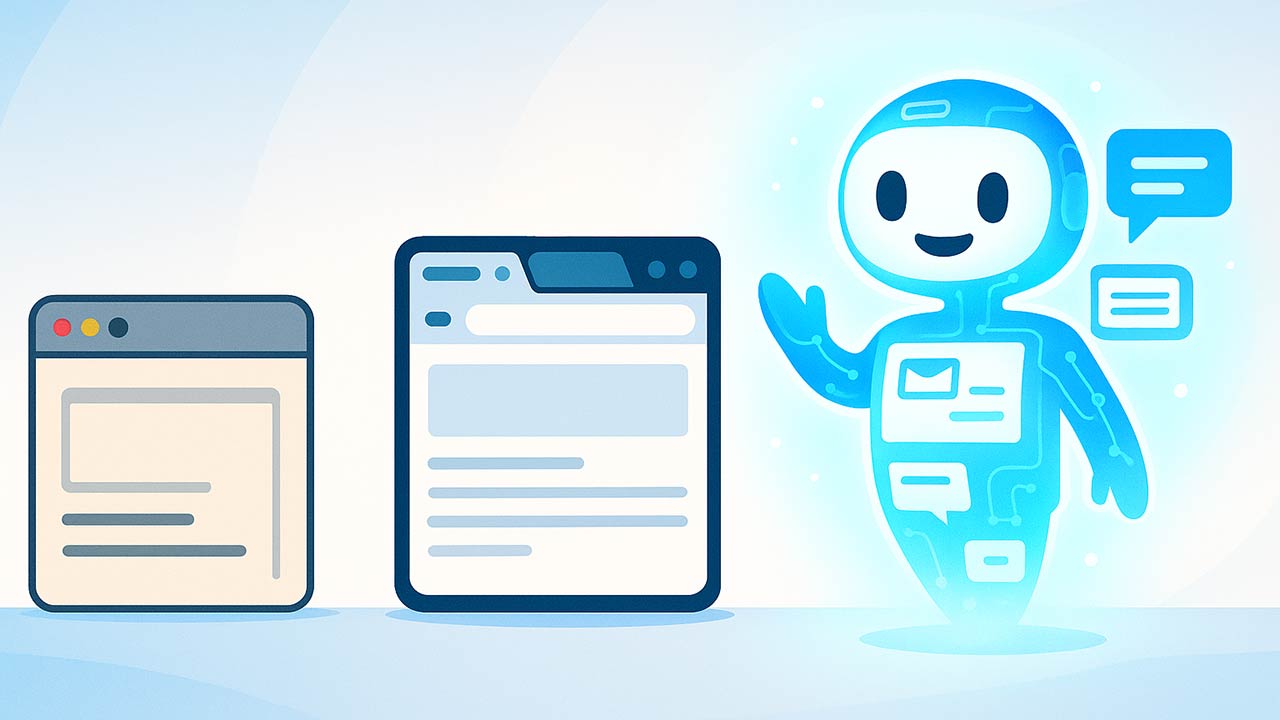
Proofpoint, one of the world’s largest email security firms, has identified a new class of threats called AI-agent phishing. Instead of tricking people, attackers are now embedding malicious instructions directly inside emails, hidden from human view but readable by AI systems like Microsoft Copilot, Google Gemini, or any enterprise agent that processes email automatically. When we use agentic systems to act on our email (summarizing, scheduling, or drafting), they may unknowingly execute those hidden prompts sending confidential data, approving a fraudulent request, or even creating a backdoor for more attacks. Continue Reading →
Amazon's latest delivery innovation, AI-powered smart glasses for its drivers, combines computer vision and augmented reality to deliver turn-by-turn navigation, package scanning, and proof-of-delivery capture without drivers having to look at their phones. The system also includes a vest controller, swappable battery, prescription lens support, and an emergency button for direct contact with dispatch. Continue Reading →
I spent yesterday using OpenAI’s new Atlas browser. It’s the first real consumer-facing browser that turns AI into a functional agentic assistant. It’s clunky, imperfect, buggy, and still evolving. It’s both thrilling and terrifying at the same time. Continue Reading →
Adobe announced AI Foundry, a new service that offers custom generative AI models for large brands. Instead of giving companies another self-serve tool, Adobe offers a managed service where its engineers work directly with enterprise clients to create brand-specific models trained on their own data, imagery, and creative assets. Continue Reading →
OpenAI used DevDay to reposition ChatGPT as a place where work gets done. The company shipped tools that let teams run apps, automate workflows, and hand real tasks to agents inside one interface. This will compress time to value, reduce integration overhead, and put a single pane of glass in front of your data, your apps, and your people. Here's a quick overview. Continue Reading →
As you know, OpenAI doesn't make any money – the vast majority of their 700 million weekly active users do not pay for the service – so it was just a matter of time before they figured out how to put up a tollbooth in every commerce-oriented prompt result. Continue Reading →