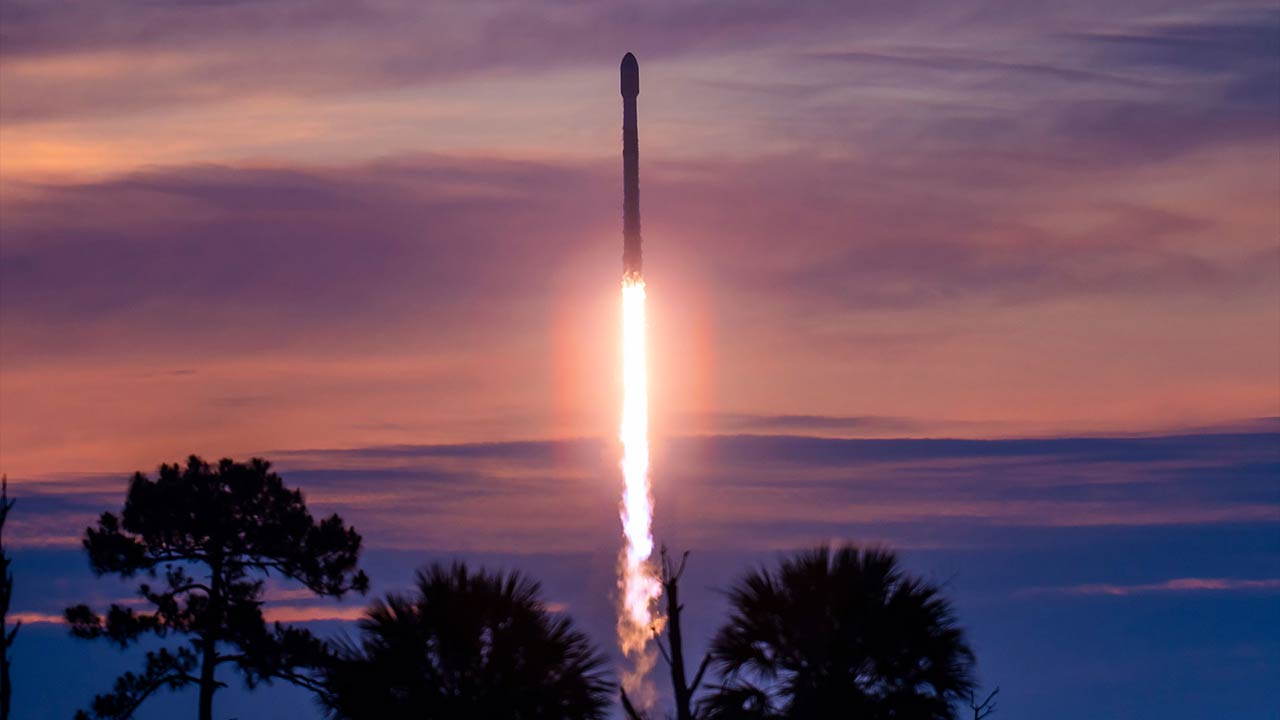
SpaceX went public this morning at $135 a share, raising $75 billion at a $1.77 trillion valuation. It is the largest IPO in history, more than double Saudi Aramco’s $29 billion record from 2019. If the market holds the valuation, it puts Musk on a path to becoming the world’s first trillionaire.
SpaceX generated about $18.7 billion in revenue in 2025 and lost nearly $5 billion. At $1.77 trillion, buyers are paying about 100 times revenue for an unprofitable company. Nvidia traded near 25 times sales at peak enthusiasm. The trillion-dollar headline is fascinating, but the real story is that investors are trying to put a price tag on the future, and nobody knows exactly what that future is worth.
SpaceX is three businesses stapled to one ticker. Launch is the foundation business; SpaceX flies more than 80 percent of US orbital payloads. Starlink is the profit engine, with 10 million subscribers and a connectivity segment that posted an estimated $1.19 billion quarterly profit. Then there’s xAI, which SpaceX absorbed in an all-stock merger earlier this year. Buyers who wanted rockets and satellites also own a cash-burning AI lab. (I’d read the S-1 along with the headlines.)
Interestingly, Musk will hold more than 82 percent of the voting power. Practically speaking, no board or shareholder can override him. SPCX is an attention stock, which is a security whose value tracks one person’s focus – and that person also runs Tesla and X.
This will also be a price discovery story. Wall Street is already looking toward OpenAI, Anthropic, and the next wave of AI listings. Today’s IPO may set the comps for the entire AI class of 2026. If SPCX holds above $2 trillion, every late-stage AI valuation gets marked up. If it fades, the whole class reprices. I have no idea which way this goes, and neither does anyone else. I guess we’ll just strap ourselves onto a rocket and see where it lands.
Every company needs a Claw strategy. Do you have one?
Author’s note: This is not a sponsored post. I am the author of this article and it expresses my own opinions. I am not, nor is my company, receiving compensation for it. This work was created with the assistance of various generative AI models.
About Shelly Palmer
Shelly Palmer is the Professor of Advanced Media in Residence at Syracuse University’s S.I. Newhouse School of Public Communications and CEO of The Palmer Group, a consulting practice that helps Fortune 500 companies with AI strategy, implementation and governance, as well as technology, media and marketing. Named one of LinkedIn’s Top Voices in Technology, he is a bestselling author, covers tech and business for Fox 5’s Good Day New York, is a regular commentator on CNN, and writes the popular daily business blog Think About This. Follow @shellypalmer or visit shellypalmer.com.