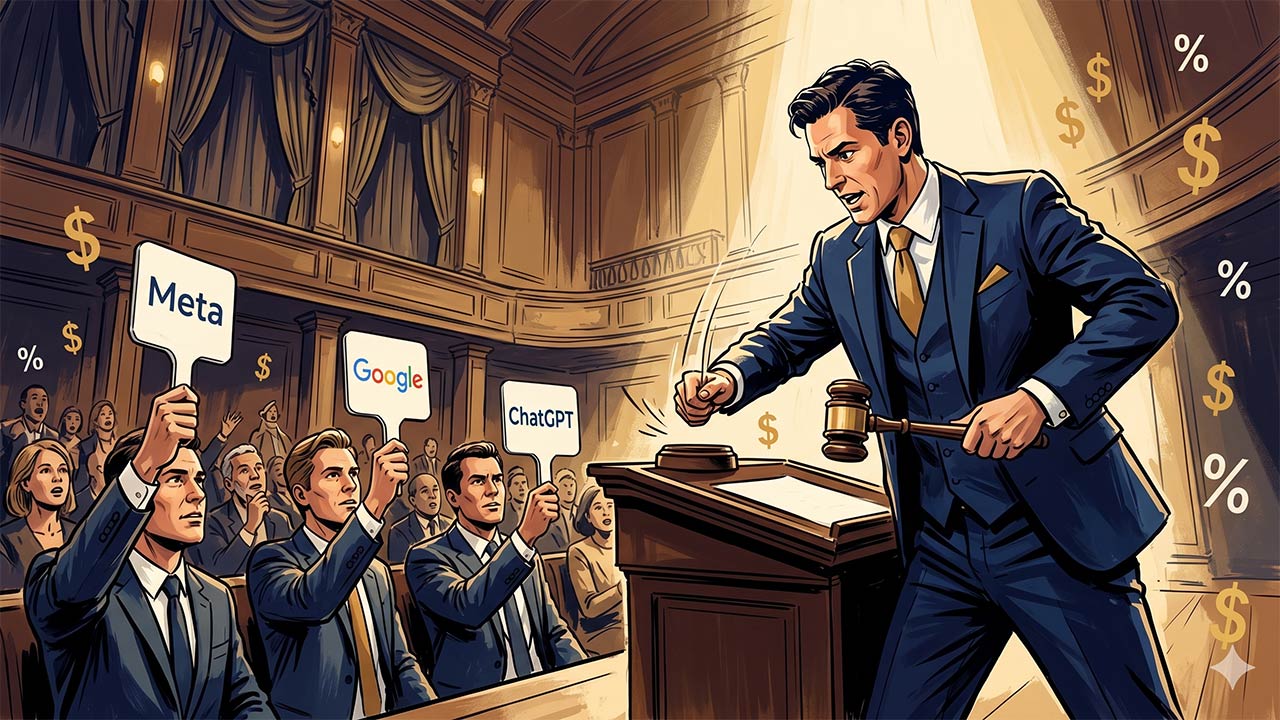
OpenAI is adding CPC (cost-per-click) to ChatGPT ads this week. Advertisers can now bid $3 to $5 per click, which puts ChatGPT somewhere between Meta (cheap clicks, browsing intent) and Google Search (expensive clicks, purchase intent). Where it actually lands will depend on proving something OpenAI has not yet proven: does a ChatGPT click drive an outcome?
Back in February, OpenAI launched its ads product with $60 CPMs. Ten weeks later, Digiday reported that inventory was clearing at $25 (a 58 percent price collapse). The numbers confirm the buyside story; early advertisers could not prove the ads were working. Click-through rates could not be measured because they came in below Google benchmarks. A partial explanation could be the immaturity of the conversion stack, but Occam’s razor says the ads weren’t working.
We also know that OpenAI is projected to lose $14 billion this year; the company has a $852 billion valuation and a $1 trillion IPO target in 2027. They cannot walk an S-1 into public markets with a subscription-only story when their compute bill runs to $1.4 trillion. They’ll need ad revenue and four to six quarters of growth to sell the narrative. CPC is a forcing function that may help them get there.
Sam Altman spent two years calling ads “a last resort” and “uniquely unsettling.” A researcher named Zoe Hitzig resigned the day ads launched. Anthropic ran Super Bowl spots calling the move “deception” and picked up 11% more daily users. Perplexity killed its own ad test and is going subscription-only. The industry is splitting into two camps. Which camp is right? Why can’t they both be right?
Every company needs a Claw strategy. Do you have one?
Author’s note: This is not a sponsored post. I am the author of this article and it expresses my own opinions. I am not, nor is my company, receiving compensation for it. This work was created with the assistance of various generative AI models.
About Shelly Palmer
Shelly Palmer is the Professor of Advanced Media in Residence at Syracuse University’s S.I. Newhouse School of Public Communications and CEO of The Palmer Group, a consulting practice that helps Fortune 500 companies with AI strategy, implementation and governance, as well as technology, media and marketing. Named one of LinkedIn’s Top Voices in Technology, he is a bestselling author, covers tech and business for Fox 5’s Good Day New York, is a regular commentator on CNN, and writes the popular daily business blog Think About This. Follow @shellypalmer or visit shellypalmer.com.