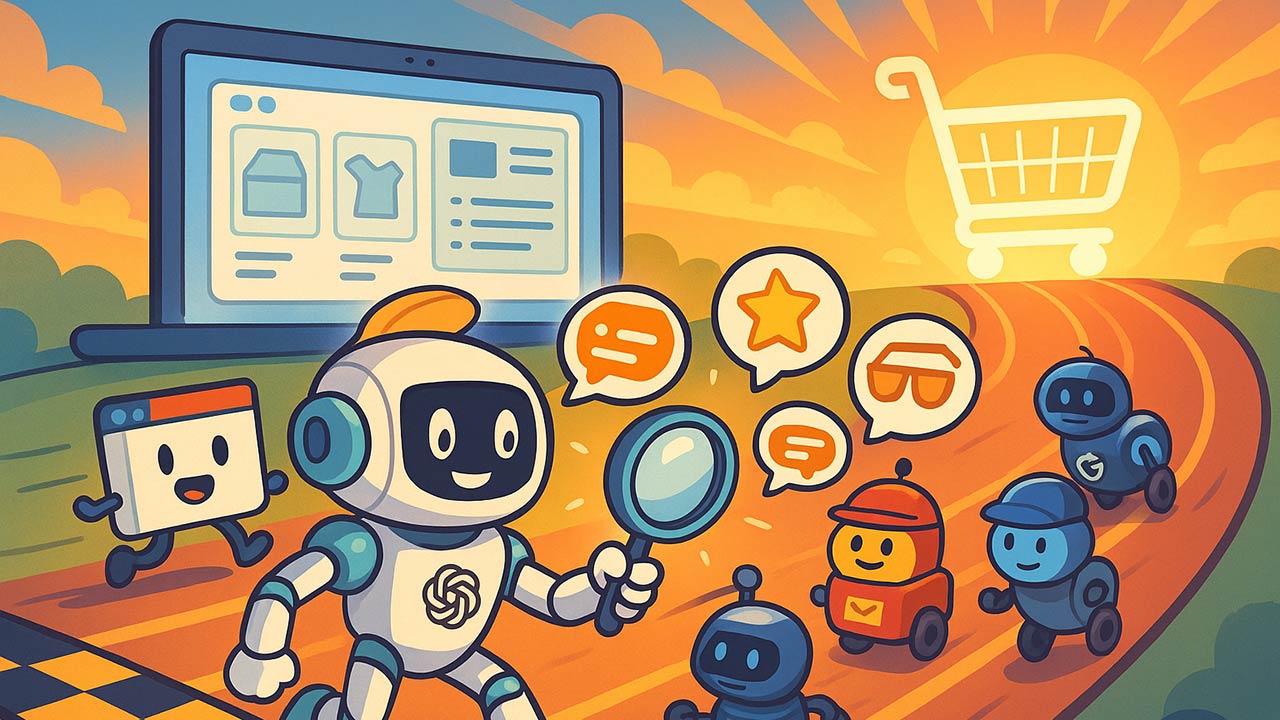
OpenAI launched “shopping research” in ChatGPT yesterday, a feature that generates personalized buyer’s guides by synthesizing product information from across the web. The timing (Black Friday week) is deliberate; OpenAI is betting it can become the starting point for purchase decisions.
According to OpenAI’s announcement, the tool runs on a version of GPT-5 mini trained with reinforcement learning specifically for shopping tasks. The company claims the new model accurately identifies products matching user criteria 64% of the time, compared to 37% for previous ChatGPT product queries (per internal evaluations reported by Investing.com and WinBuzzer). Users describe what they want in natural language, answer clarifying questions, and receive a structured comparison of options with specs, reviews, and tradeoffs.
OpenAI says the model draws answers from what it considers “higher-quality” sources, with user experiences on Reddit weighted more heavily than paid marketing or reviews on product pages. Bloomberg reported that OpenAI representatives told journalists the tool explicitly deprioritizes sponsored content. As this approach gains traction, brands that rely on traditional review management, sponsored placements, or SEO-optimized product pages are going to have to work out how to surface actionable data inside of ChatGPT’s shopping experience.
Target and Walmart have both announced partnerships with OpenAI and are among the first major retailers to integrate with ChatGPT’s Instant Checkout feature, which will enable direct purchasing inside the chat interface.
The race for “share of prompt” is accelerating. Keep your eye on shopping research, but also pay close attention to OpenAI’s Atlas browser as well as its Apps SDK. Watch Perplexity and its Comet browser. And, of course, get ready for whatever a fully Gemini-powered Chrome experience will do to online shopping writ large.
Closer to the point of sale, both Walmart (Sparky) and Amazon (Rufus) have AI-powered shopping assistants. We’ll just have to wait to see if consumers warm up to them.
Author’s note: This is not a sponsored post. I am the author of this article and it expresses my own opinions. I am not, nor is my company, receiving compensation for it. This work was created with the assistance of various generative AI models.
About Shelly Palmer
Shelly Palmer is the Professor of Advanced Media in Residence at Syracuse University’s S.I. Newhouse School of Public Communications and CEO of The Palmer Group, a consulting practice that helps Fortune 500 companies with AI strategy, implementation and governance, as well as technology, media and marketing. Named one of LinkedIn’s Top Voices in Technology, he is a bestselling author, covers tech and business for Fox 5’s Good Day New York, is a regular commentator on CNN, and writes the popular daily business blog Think About This. Follow @shellypalmer or visit shellypalmer.com.