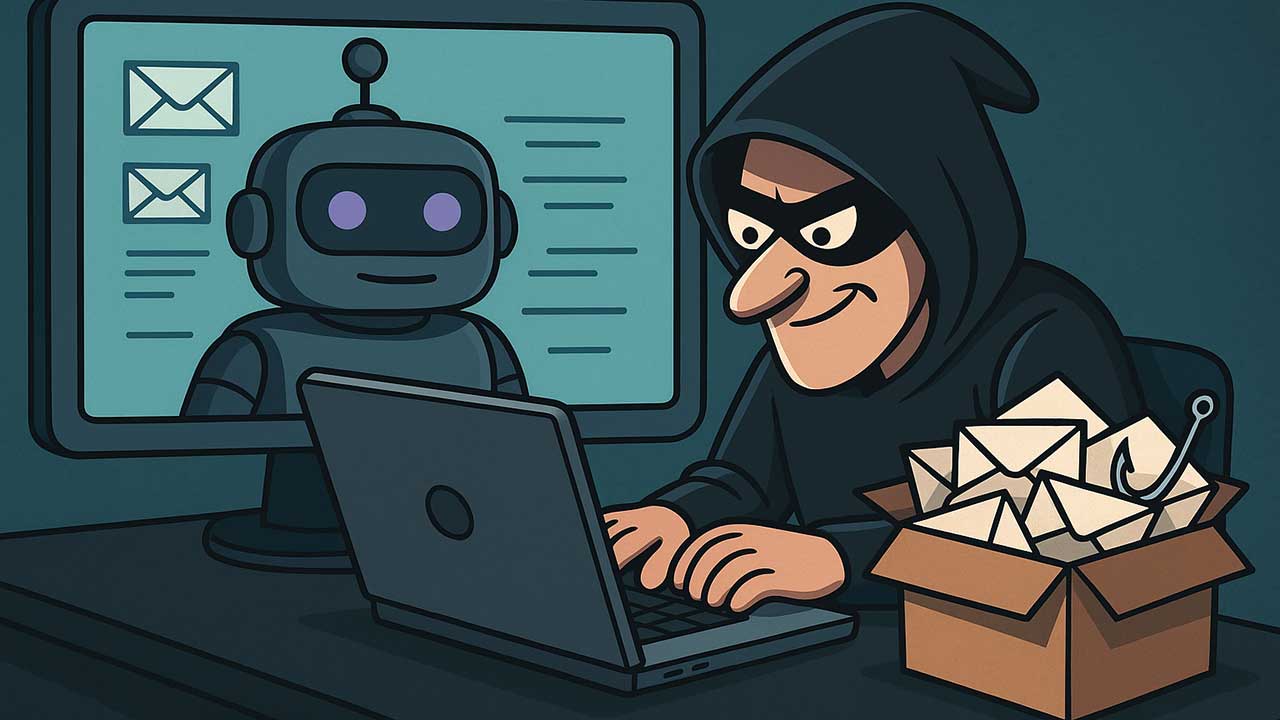
According to multiple reports, SpamGPT is an underground tool being sold on dark-web forums as a turnkey “spam-as-a-service” platform. Think Mailchimp for criminals. Instead of helping brands send newsletters, it’s designed to help attackers launch large-scale phishing campaigns.
The details are still fuzzy. Researchers say the toolkit includes campaign dashboards, inbox monitoring, deliverability testing, and even an AI assistant called KaliGPT to write convincing phishing copy. Some outlets report that access to the full platform costs around $5,000. If true, it would give low-skill criminals the same campaign management capabilities as legitimate marketers.
We don’t yet know how real or widespread SpamGPT is. But even if this specific service turns out to be hype, some version of it is inevitable. The economics of cybercrime guarantee it. Phishing is the number-one attack vector worldwide, and any technology that lowers the barrier to entry will accelerate its spread.
From Artisanal Crime to Commoditized Crime
For years, launching a credible phishing campaign required expertise. You had to configure SMTP servers, scrape addresses, tune your copy to avoid spam filters, and monitor deliverability. Today, most of this is automated. AI writes the emails. Cloud infrastructure provides scale. Dashboards handle analytics.
If real, SpamGPT marks the evolution of cybercrime into an AI-powered, single-button-press agentic workflow. The lower skill requirements will widen access and increase attack volume.
We’ve seen this pattern before. Ransomware-as-a-service turned a niche, technically demanding crime into a global industry. Botnets were once the domain of a few experts, then kits made them push-button simple. Spam-as-a-service follows the same playbook. AI makes the economics more favorable for attackers and more dangerous for victims.
AI Helps Bad Actors Too
An AI-powered agentic spam tool offers clear value to attackers: better inbox placement, higher engagement, and lower costs. Those are the same goals of legitimate email marketing platforms, but applied to fraud.
AI raises the quality of phishing copy. It eliminates the bad grammar and awkward phrasing that used to tip people off. It generates endless variants, making detection harder. Combine that with built-in deliverability testing and you get attacks that look, feel, and read like real business email.
Small and midsize businesses face the highest risk. Large enterprises often deploy advanced email gateways and dedicated security teams. Smaller firms usually rely on off-the-shelf spam filters and annual training modules. Those defenses were designed for a different era.
What Remains Unclear
So far, public evidence is thin. Independent, verifiable case studies of phishing campaigns traced directly to SpamGPT have not been published. We don’t know whether KaliGPT is a fine-tuned large language model, a wrapper around an existing API, or simply a marketing gimmick in a forum post. Claims of bypassing spam filters remain unproven.
The lack of proof does not change the strategic reality. Whether SpamGPT is a real product or just a brand name floated to attract buyers, someone will build it. Someone probably already has.
What Business Leaders Should Do Now
Waiting for conclusive evidence is a mistake. The right move is to assume spam-as-a-service will emerge and act accordingly.
- Lock down email authentication. SPF, DKIM, and DMARC are mandatory. Confirm your company’s posture now.
- Upgrade phishing simulations. Training against poorly written decoys is useless. Employees need exposure to AI-crafted examples.
- Invest in anomaly detection. AI raises the quality of phishing, but it also creates detectable patterns. Use AI defenses to fight AI attacks.
- Audit vendor dependencies. Many breaches begin with compromised partners. Hold your supply chain to minimum standards.
- Share intelligence. Criminals share playbooks. Enterprises need to do the same across industries.
It’s Either Here or It’s Coming Soon
SpamGPT may be real, or it may be a rebranded phishing kit hyped for clicks. Either way, it signals a future already taking shape. Spam-as-a-service will become a reality. The tools will get easier to use. The attacks will get harder to detect. The cost of waiting will rise.
The correct response is preparation, not panic. This is the time to talk with your SecOps team about fortifying resilience. Ask your cybersecurity vendors about fighting AI with AI before these playbooks go mainstream. Whether it’s SpamGPT or another similarly featured agentic system, the result will be the same: more attacks, more bad actors, and higher stakes for every business.
Author’s note: This is not a sponsored post. I am the author of this article and it expresses my own opinions. I am not, nor is my company, receiving compensation for it. This work was created with the assistance of various generative AI models.
About Shelly Palmer
Shelly Palmer is the Professor of Advanced Media in Residence at Syracuse University’s S.I. Newhouse School of Public Communications and CEO of The Palmer Group, a consulting practice that helps Fortune 500 companies with AI strategy, implementation and governance, as well as technology, media and marketing. Named one of LinkedIn’s Top Voices in Technology, he is a bestselling author, covers tech and business for Fox 5’s Good Day New York, is a regular commentator on CNN, and writes the popular daily business blog Think About This. Follow @shellypalmer or visit shellypalmer.com.