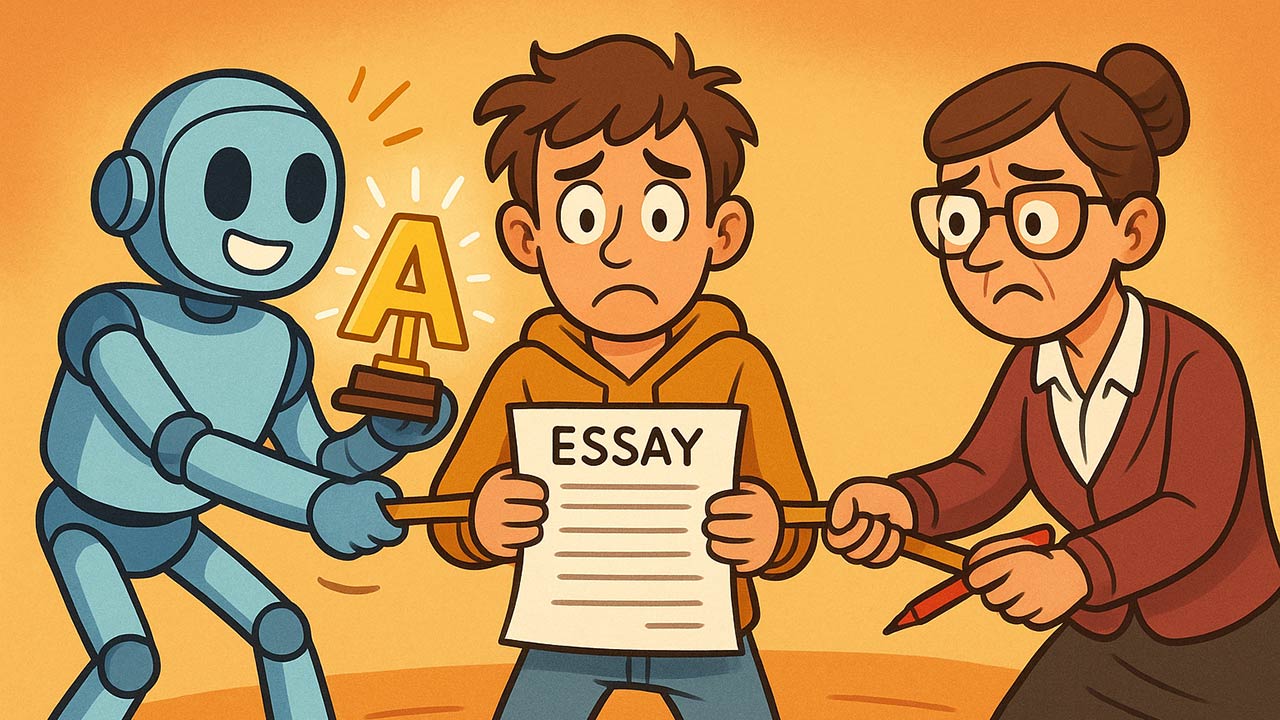
Grammarly just announced that its new AI agent can “predict whether a piece of writing will receive an A.” The tool, called AI Grader, is part of a new set of agents that the company is rolling out this fall. By analyzing assignment instructions, grading rubrics, and available information about the instructor, the system estimates whether a paper would earn an A. Grammarly claims it has trained this model on millions of writing samples that included instructor feedback.
As you know, traditional writing aids check grammar, suggest edits, and help with tone. Grammarly frames this as an educational aid. The company says it helps users improve their work before submission, but this feature is not just feedback – it is a forecast. If it works, AI Grader will change the psychological and pedagogical dynamics between students, teachers, and their assignments.
It is unclear if students will adopt this technology at scale. If they do, AI Grader will influence how papers are written and graded. Teachers will feel the pressure. If a paper earns an A from Grammarly and something lower in the classroom, students and parents will want to know why.
It also raises a broader question: if AI can simulate a grade, what is the role of grading? If students are optimizing their work to meet an AI-generated prediction, are they learning or just training themselves to please a machine?
Grammarly is making a smart business move. Students will use this tool. Schools will be forced to respond. The bigger issue is now on the table. When AI predicts the outcome of human evaluation, it becomes part of the system it is meant to support. That is not assistance – it’s influence.
Author’s note: This is not a sponsored post. I am the author of this article and it expresses my own opinions. I am not, nor is my company, receiving compensation for it. This work was created with the assistance of various generative AI models.
About Shelly Palmer
Shelly Palmer is the Professor of Advanced Media in Residence at Syracuse University’s S.I. Newhouse School of Public Communications and CEO of The Palmer Group, a consulting practice that helps Fortune 500 companies with AI strategy, implementation and governance, as well as technology, media and marketing. Named one of LinkedIn’s Top Voices in Technology, he is a bestselling author, covers tech and business for Fox 5’s Good Day New York, is a regular commentator on CNN, and writes the popular daily business blog Think About This. Follow @shellypalmer or visit shellypalmer.com.