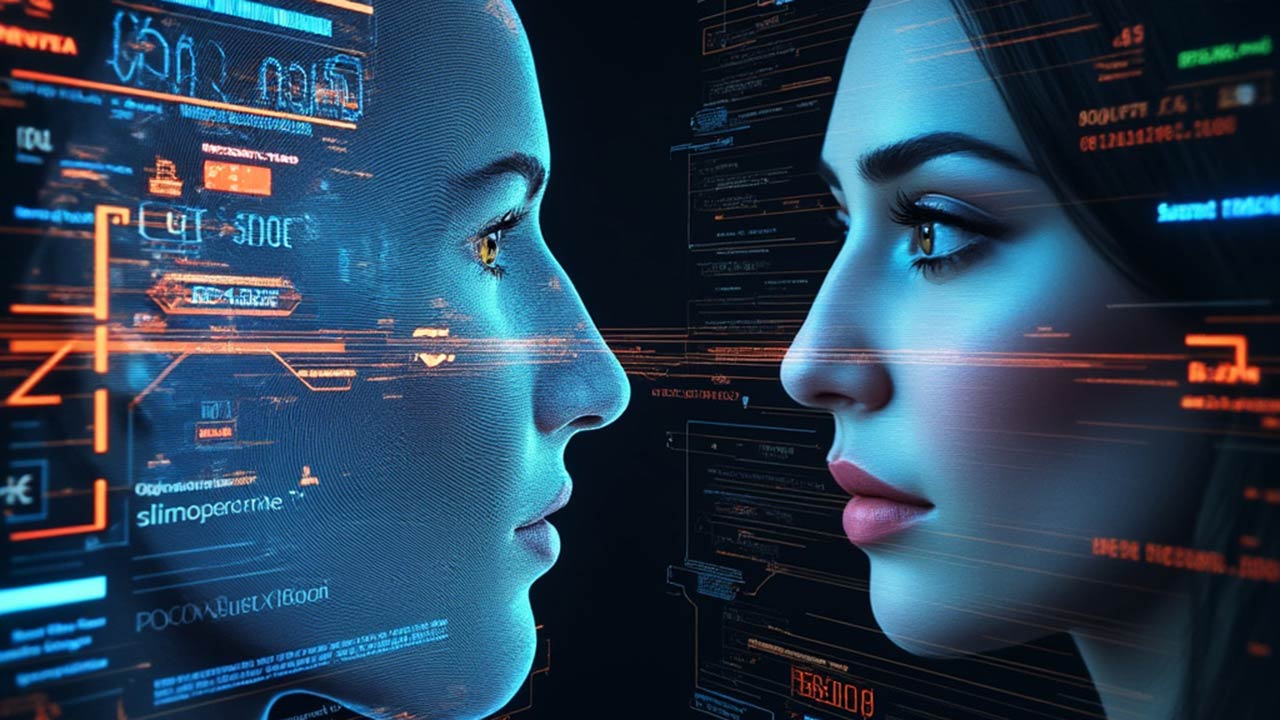
The term “deepfake” was coined in November 2017 by an eponymously named Reddit user who created a subreddit dedicated to sharing videos that used open-source face-swapping technology to create not-safe-for-work content featuring celebrities.
This initial use of “deepfake” technology was controversial and highlighted the potential for misuse. It led to widespread discussion about the ethical implications and the need for regulatory measures. But in November 2017, making a deepfake required too much technical skill for the output to be taken any more seriously than any other “fun with photoshop” propaganda.
Within a year, transformer and diffusion networks were emerging, and it became clear that we were just months away from a massive behavioral change. The subject got my undivided attention in October 2018 when I wrote Deepfakes: The Dawn of the Post-Truth Era. Within another year, I published a short white paper, Deepfakes – What You Need To Know, which aggregated my thoughts on the subject.
Today, just seven years after the term deepfake was coined, absolutely anyone who is interested in making a photorealistic image or video of anything has the ability to do so at no (or very low) cost, in real (or very near-real) time.
This is not new, nor is it news, except this morning’s big AI story is a follow-on from yesterday’s big AI story. The former President of the United States posted a deepfake for the second day in a row; as I am writing this, the tweet has more than 76 million views.
Here are my questions for you: Are deepfakes now normalized? If your answer is no, please reach out to me and explain why you don’t think they are. If your answer is yes, please reach out and tell me what techniques you will personally use to filter the barrage of misinformation.
Importantly, I’m not interested in the blatant, outlandish nonsense content that is obviously nonsense. I’m far more worried about the subtle, super-authentic-looking total misinformation, propaganda, and “slop” (a relatively new term for gratuitously “spammy” AI-generated content) that will seep into our collective consciousness and impact our beliefs (and behaviors) over time.
No matter what your position on this is, please respond and let me know. I think this is one of the most important issues of our time and I am anxious to hear your thoughts.
Author’s note: This is not a sponsored post. I am the author of this article and it expresses my own opinions. I am not, nor is my company, receiving compensation for it. This work was created with the assistance of various generative AI models.
About Shelly Palmer
Shelly Palmer is the Professor of Advanced Media in Residence at Syracuse University’s S.I. Newhouse School of Public Communications and CEO of The Palmer Group, a consulting practice that helps Fortune 500 companies with AI strategy, implementation and governance, as well as technology, media and marketing. Named one of LinkedIn’s Top Voices in Technology, he is a bestselling author, covers tech and business for Fox 5’s Good Day New York, is a regular commentator on CNN, and writes the popular daily business blog Think About This. Follow @shellypalmer or visit shellypalmer.com.