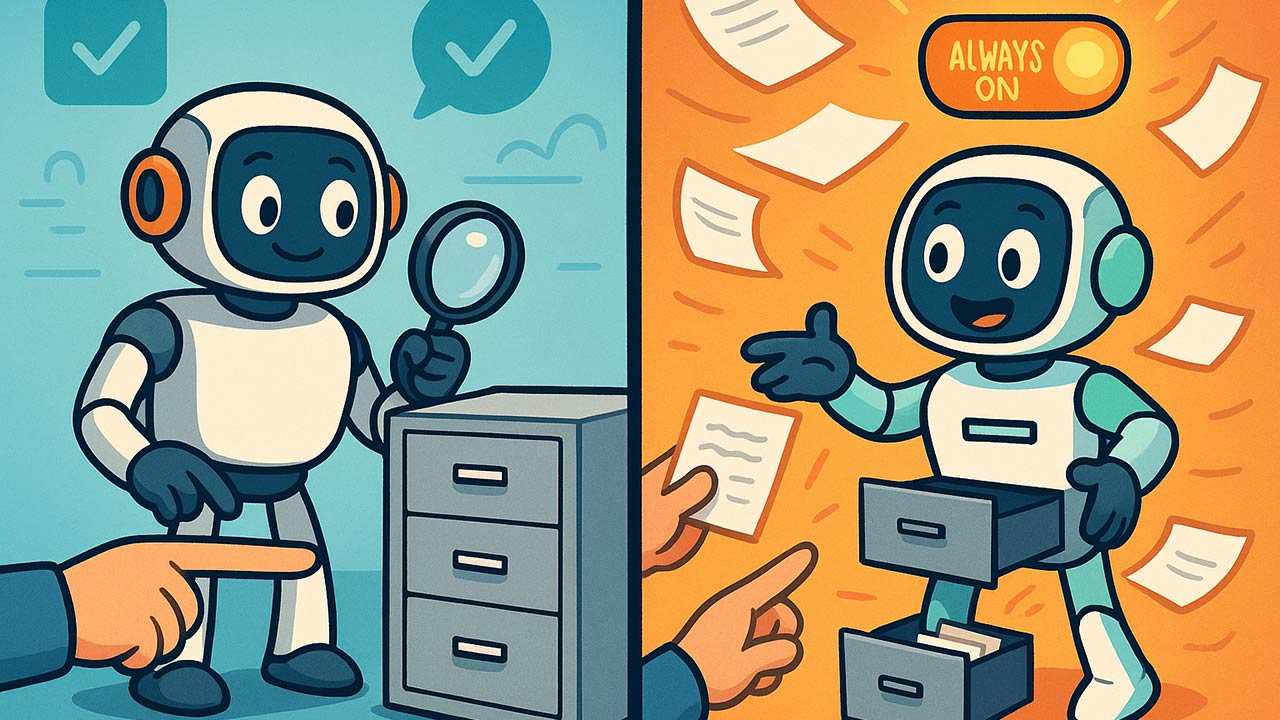
Anthropic's Claude can now automatically "remember" details from previous conversations without requiring users to prompt it each time. The enhanced memory feature, currently rolling out exclusively to Team and Enterprise subscribers, brings Claude to parity with OpenAI's ChatGPT and Google's Gemini, both of which already offer cross-chat memory features. Continue Reading →
This week has been full of hands-on AI experiments. Yesterday, we built a web-based “Yiddish Curse Generator” in under 10 minutes by simply describing it to Claude Code. Today, we’re hunting for Prime Day deals, not by browsing Amazon, but by asking ChatGPT (or any AI platform with web access) to find exactly what we want. Continue Reading →
I received quite a few emails questioning the thesis of my Sunday essay, What Happens When English Becomes the Only Programming Language You Need? Rather than answer all of you individually, here's a quick case study. Continue Reading →
Yesterday at Anthropic’s first “Code with Claude” conference in San Francisco, the company introduced Claude Opus 4 and its companion, Claude Sonnet 4. The headline is clear: Opus 4 can pursue a complex coding task for about seven consecutive hours without losing context. That leap takes us from last year’s five-minute attention span to what feels like a full work shift at silicon speed. Continue Reading →
Claude
Most heavy LLM users will tell you that ChatGPT is the GOAT, but they prefer Claude for writing. Why wasn't Claude the GOAT? For people who use off-the-shelf chat interfaces, convenience always wins. ChatGPT had web access; Claude didn't. New day, new tech. Anthropic has finally given Claude what it's been missing: the ability to search the web. This may seem like a minor feature update, but it's not—it's huge. Continue Reading →
Anthropic announced Claude 3.7 Sonnet, its latest AI model they say is designed for practical use in business and development. The company describes it as a hybrid system, blending fast responses with detailed reasoning, adjustable for tasks like quick answers or complex problem-solving. Anthropic claims this makes it versatile, avoiding the need for separate models. They say it is particularly strong in coding, with a high success rate on real-world software tasks. Continue Reading →