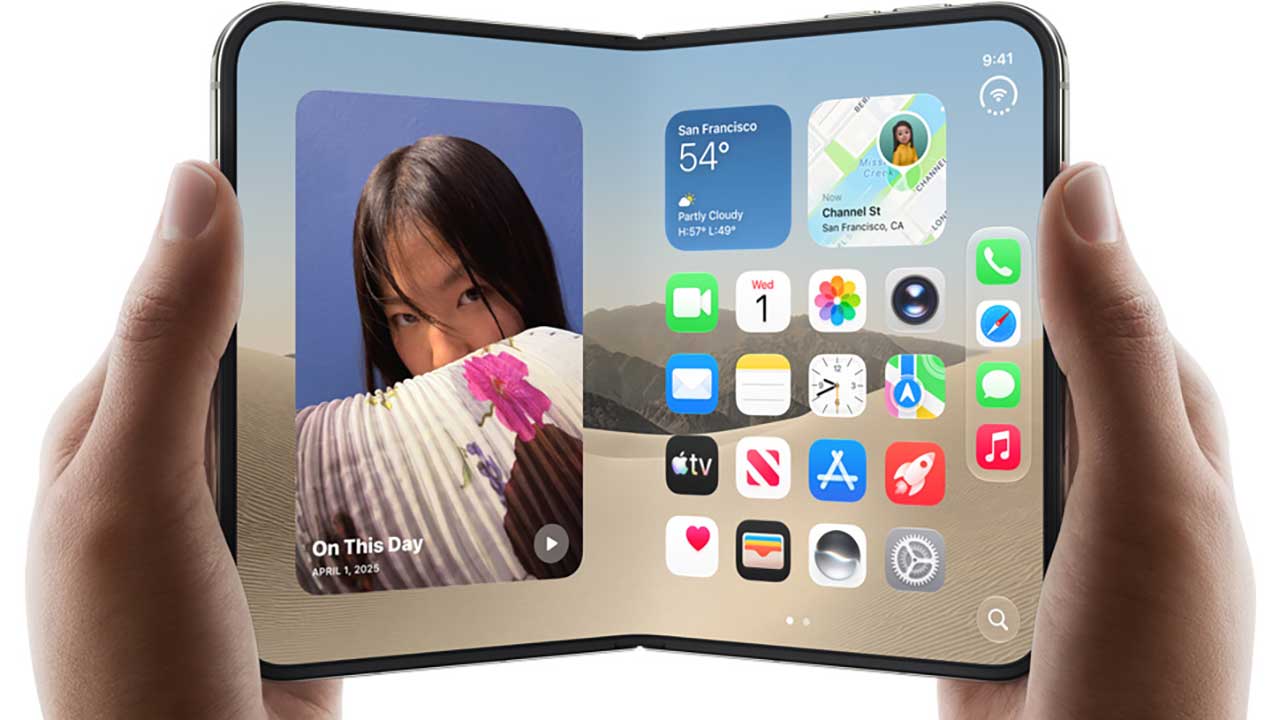
Something strange happened this week. For the first time since Apple started making iPhones, they launched a flagship phone and, not only did I not order one, I didn’t even think about it. I watched the keynote on September 9. Yawned… thought about the iPhone Duo for about 10 seconds. But giving up camera capabilities for more screen real estate was a non-starter. And, after hearing about the marginally incremental feature improvements, I hardly even considered replacing my iPhone 17 Pro Max with an 18. I’m not surprised by my lack of interest. I’m surprised that Apple could not pique it. Let’s explore.
The iPhone 18 Pro Max Is a Better 17 Pro Max
The iPhone 18 Pro Max went on sale Friday at $1,299, which is $100 more than the 17 Pro Max cost a year ago. It has the same dimensions as the 17 Pro Max, the same 6.9-inch display, and the same three-camera arrangement and focal lengths. It is slightly heavier because Apple added a bigger battery and a new cooling system. (The eSIM model is rated for 45 hours of video playback.) The Dynamic Island is smaller and can show three Live Activities at once. There is a new color called burgundy.
The A20 Pro chip is built on a 2-nanometer process. Apple says the GPU is up to 40 percent faster than the A19 Pro in my pocket, memory bandwidth is up 50 percent, and sustained performance is up as much as 40 percent thanks to a vapor chamber with three times the surface area. Can you name a time when your 17 Pro Max felt slow? I can’t.
Apple focused (pardon the pun) on the camera package. The 48MP main camera now has a physical iris. Six laser-cut blades move between four positions from f/1.48 to f/4.0; last year’s lens was fixed at f/1.78. Apple claims about 50 percent better low-light performance wide open and sharper group shots stopped down. I have spent a lot of my life around lenses, and a real aperture is a real tool. CineD did the math for working shooters: the full range is a little under three stops. CineD also cautions that the four aperture settings may not allow a smooth pull mid-shot, and you will still need ND filtration on a bright exterior when shooting at a 180-degree shutter angle.
Greg Joswiak, Apple’s marketing chief, said in the press release that “we didn’t just make incremental improvements.” Executives say that when they know what the reviews are going to say.
The Duo Is a $1,999 Compromise
An entry-level iPhone Duo (256GB) arrives October 23 at $1,999. Add the optional $129 Folio and AppleCare+ with Theft and Loss at $199.99 a year and my math puts the total at about $2,500 on day one and close to $3,000 over three years, assuming sales tax and no increase in the annual coverage price. BTW, the 2TB version lists for $3,199.
Closed, it is a passport-sized phone with a 5.4-inch screen. Open, it is a 7.6-inch tablet that Apple says is 50 percent larger in area than the 18 Pro Max display, wrapped in polished grade 5 titanium with a hinge built from more than 100 components. iOS 27 runs two apps side by side on it, which is a first for iPhone.
Samsung announced the first Galaxy Fold on February 20, 2019, with a 7.3-inch inner display, a 4.6-inch cover display, and a $1,980 price. I’ve had folding Samsung phones (as well as the Google Pixel Fold, Huawei Mate X, and a few others now parked in my smartphone graveyard) since they each debuted and, so far, every half-phone/half-tablet smartphone has been a solution in search of a problem. Apple took seven and a half years to add 0.3 inches and $19. Apple’s hinge and its nano-texture answer to the crease may well be better engineering (real world reviews from actual users will tell us in October). That said, the category is old news.
Underwhelmingly, the Duo has two rear cameras. Compared with the 18 Pro, it gives up the dedicated 4x telephoto camera and its 8x optical-quality setting, the variable aperture, Pro controls, ProRAW, ProRes RAW, spatial photos and video, the LiDAR scanner, the Action button, and Face ID (the Duo uses Touch ID in the side button). Its outer front camera is 12 megapixels, the 18 Pro’s is 18. To quote my daughter, “My camera is my primary smart phone.” For the kind of money Apple is charging, the cameras should blow your mind.
The Best New Feature Is Free
The most interesting thing Apple is shipping is iOS 27, which includes Siri AI (in beta, English first), a rebuilt assistant that reads what is on your screen, searches your messages, mail, and photos for context, takes action inside apps, and answers general questions. It runs on an iPhone 15 Pro, iPhone 15 Pro Max, the iPhone 16 lineup and later, and the iPhone Air. So Siri AI is not a reason for me to replace my 17 Pro Max.
I wrote in June that Apple outsourced Siri’s brain to Google. Apple is reportedly paying about $1 billion a year for a custom 1.2-trillion-parameter Gemini model, and it runs through Apple’s Private Cloud Compute infrastructure, which now extends to Google Cloud. The A20 Pro’s Neural Engine has double the on-device AI compute of last year’s chip. But Siri AI’s most demanding work still happens in data centers. Over time, we will find out how developers take advantage of the A20 Pro chip for onboard AI. Awesome AI in your pocket would be a compelling reason to upgrade (even mid-cycle).
They Broke the Upgrade Cycle
For 19 years, a new iPhone meant new capabilities. That’s the reason I ordered one every year. This year, none of the new capabilities gave me a reason to upgrade. In July, Apple also killed the iPhone Upgrade Program in the U.S., which was my favorite way to always have the latest hardware with AppleCare+ included. The replacement is a Klarna lease. You can still get a new phone every year with a 12-month lease, but AppleCare is extra, and keeping the phone requires a buyout payment.
One more thing: A footnote in the Apple press releases says Siri AI, the photo editing tools, and Image Playground are subject to daily usage limits that vary with request complexity and system demand. Then it says: “Expanded access to such features will be available for a fee in the future.” It sounds like a paid tier is on the way.
So, for now, I’m keeping my 17 Pro Max. I will pick up a Duo in a store in October because I pick up everything. I expect to put it back down. When Apple puts a price on expanded Siri AI access, I will probably subscribe (assuming Siri AI doesn’t suck). That’s the Apple product I have been waiting for, and it doesn’t come in burgundy.
Author’s note: This is not a sponsored post. I am the author of this article and it expresses my own opinions. I am not, nor is my company, receiving compensation for it. This work was created with the assistance of various generative AI models.
About Shelly Palmer
Shelly Palmer is the Professor of Advanced Media in Residence at Syracuse University’s S.I. Newhouse School of Public Communications and CEO of The Palmer Group, a consulting practice that helps Fortune 500 companies with AI strategy, implementation and governance, as well as technology, media and marketing. Named one of LinkedIn’s Top Voices in Technology, he is a bestselling author, covers tech and business for Fox 5’s Good Day New York, is a regular commentator on CNN, and writes the popular daily business blog Think About This. Follow @shellypalmer or visit shellypalmer.com.