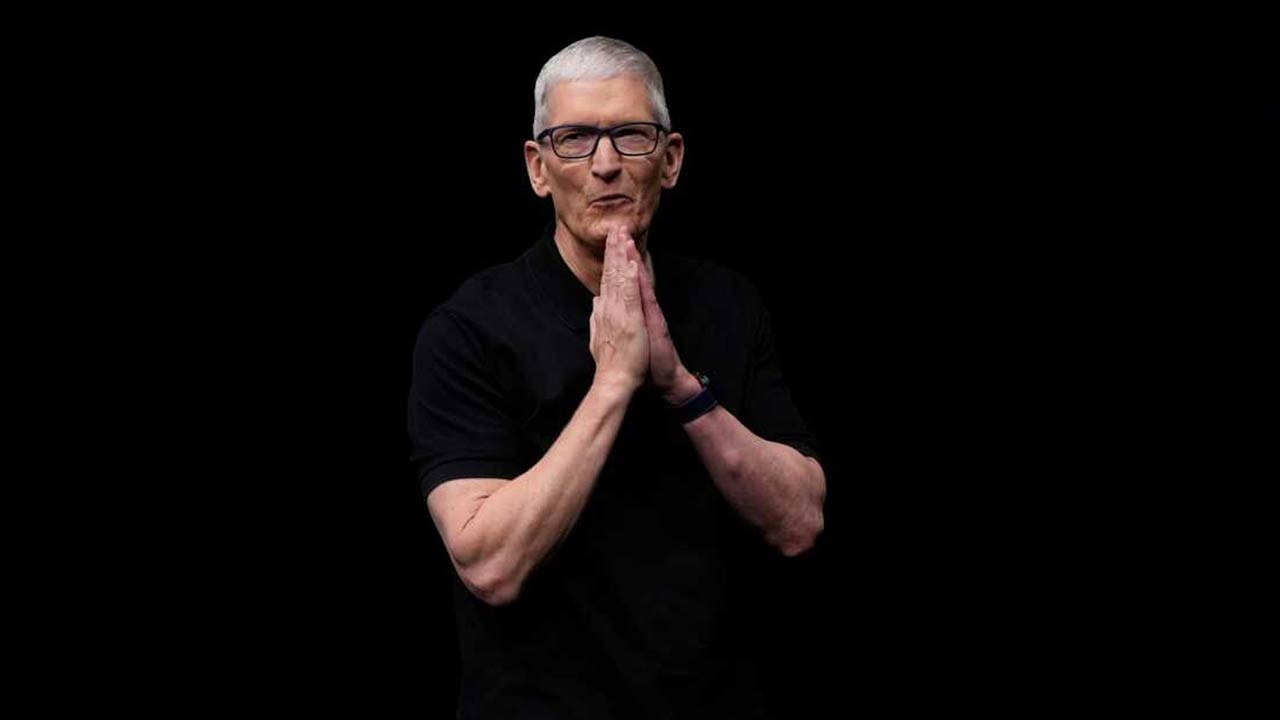
Tim Cook announced yesterday that he will step down as Apple CEO on September 1. John Ternus, head of hardware engineering (and an Apple lifer since 2001), will take over. Cook will stay on as executive chairman with responsibility for global policymaker engagement.
The market yawned; the stock fell less than a percent after hours. The muted reaction makes sense on the surface as Ternus has been the presumed heir for at least a year. The handoff is orderly, and the board voted unanimously.
The buried story is what Apple told us about the next decade by picking Ternus: they picked an engineer. That is a strategic declaration, even if no one at Apple will say so out loud. Apple is betting that the next ten years will be won on hardware integration. They are betting that the phone, watch, glasses, and whatever comes after remain the primary surface where intelligence lives. They are betting that being behind on frontier AI matters less than owning the device on which AI runs. The Google Gemini partnership for Siri tells you the same thing: Apple will rent the model and own the metal.
You can argue with that bet. Apple’s AI capex trails its megacap rivals by a wide margin. The Siri delay is real. Apple’s internal AI leadership turned over in December. The consensus view is that Apple is late and does not have a credible catch-up plan.
However, Apple has been late to every major platform shift since the original iPod. Late to MP3 players. Late to smartphones. Late to watches. Late to wireless earbuds. In every case, the company waited until the integration story was clear, then shipped the reference product. Ternus helped ship most of those reference products.
What Cook kept for himself is the other tell; executive chairman with responsibility for policymaker engagement means Cook still owns Trump, Beijing, Brussels, and Delhi. The politically hardest problem at Apple stays on Cook’s desk while Ternus gets to focus on product.
The verdict on this transition will come from two places: the rebuilt Siri (scheduled to launch at WWDC in June) and whatever Ternus ships in his first three years that is not a refresh.
Every company needs a Claw strategy. Do you have one?
Author’s note: This is not a sponsored post. I am the author of this article and it expresses my own opinions. I am not, nor is my company, receiving compensation for it. This work was created with the assistance of various generative AI models.
About Shelly Palmer
Shelly Palmer is the Professor of Advanced Media in Residence at Syracuse University’s S.I. Newhouse School of Public Communications and CEO of The Palmer Group, a consulting practice that helps Fortune 500 companies with AI strategy, implementation and governance, as well as technology, media and marketing. Named one of LinkedIn’s Top Voices in Technology, he is a bestselling author, covers tech and business for Fox 5’s Good Day New York, is a regular commentator on CNN, and writes the popular daily business blog Think About This. Follow @shellypalmer or visit shellypalmer.com.