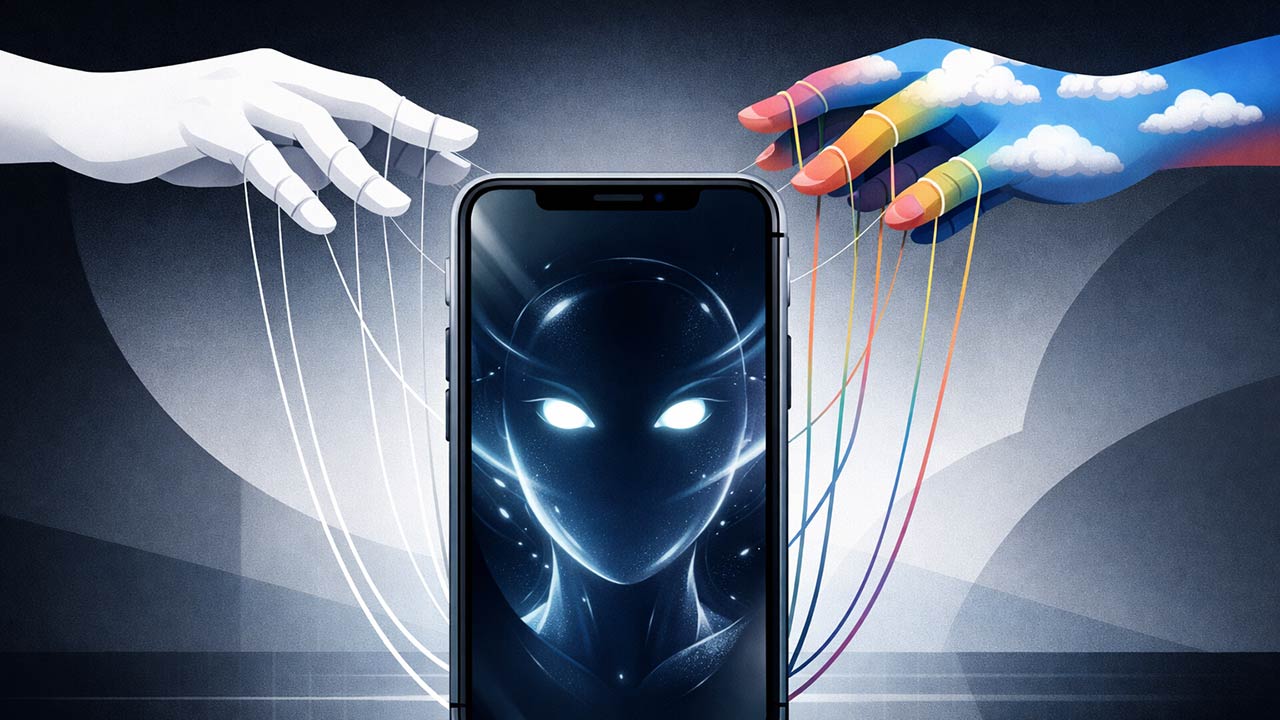
Apple will pay Google roughly $5 billion over the next several years to power Siri with Gemini. Bloomberg’s Mark Gurman reported yesterday that the new assistant, codenamed “Campos,” will replace Siri entirely in iOS 27 this fall. Apple gets competitive AI. Google gets deeper integration across 2 billion active Apple devices.
OpenAI declined the opportunity. Sources told the Financial Times that OpenAI chose to build hardware with Jony Ive rather than become Apple’s AI backend. Anthropic lacks Google’s infrastructure scale. Apple’s options narrowed quickly.
Campos will search the web, generate images, write code, and analyze files. The notable capability: screen awareness. The assistant will see what’s on your display and act on it. Siri currently can’t do that.
Privacy gets complicated. Apple says processing happens on-device and in its Private Cloud Compute, but Google’s TPU infrastructure handles the heavy computation. The details of that handoff remain unclear.
The deal is non-exclusive: Apple keeps its existing ChatGPT integration, and Google gets no branding on the interface. Both companies preserve optionality while solving immediate needs.
Does building your AI on a competitor’s foundation create dependency or leverage? Apple’s hardware still differentiates. Google’s models still need distribution. The answer probably depends on which company executes better over the next three years.
Author’s note: This is not a sponsored post. I am the author of this article and it expresses my own opinions. I am not, nor is my company, receiving compensation for it. This work was created with the assistance of various generative AI models.
About Shelly Palmer
Shelly Palmer is the Professor of Advanced Media in Residence at Syracuse University’s S.I. Newhouse School of Public Communications and CEO of The Palmer Group, a consulting practice that helps Fortune 500 companies with AI strategy, implementation and governance, as well as technology, media and marketing. Named one of LinkedIn’s Top Voices in Technology, he is a bestselling author, covers tech and business for Fox 5’s Good Day New York, is a regular commentator on CNN, and writes the popular daily business blog Think About This. Follow @shellypalmer or visit shellypalmer.com.