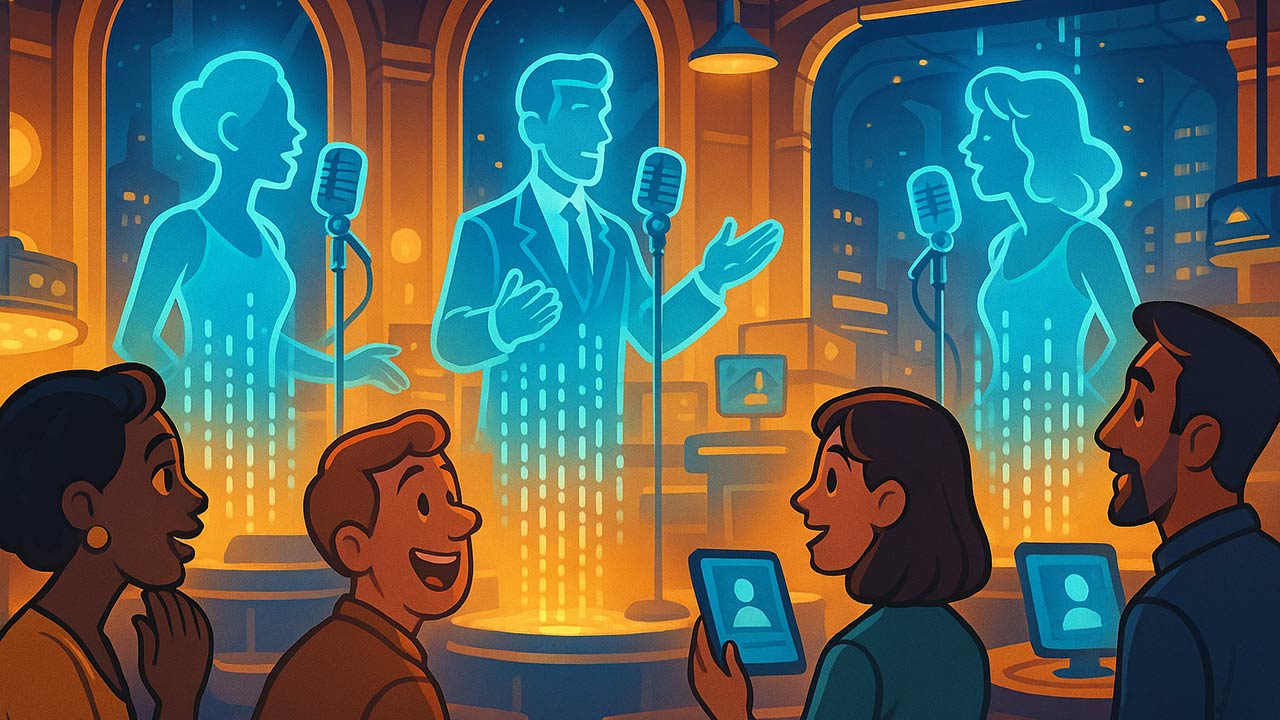
ElevenLabs has launched the Iconic Voice Marketplace, a licensing platform that lets brands legally use AI-generated replicas of famous voices in content and ads. It’s a consent-based system designed to bring order to synthetic speech. The company calls it a “performer-first” model where every licensed voice is cleared, compensated, and auditable.
The marketplace connects rights holders with buyers and handles the synthesis. It includes 28 verified voices ranging from Michael Caine and Liza Minnelli to Judy Garland, Maya Angelou, and Mark Twain. Some are cloned from living actors, while others are generated from archival recordings of historical figures. Michael Caine summed up the pitch: “It’s not about replacing voices; it’s about amplifying them.”
Consent is good business. It creates markets instead of lawsuits. AI translation and dubbing tools are already turning any voice into every language. Estates and performers with recognizable voices will earn new revenue. The IP is extremely valuable (if it is protectable). But the long-term economics for AI providers will be brutal. The tech is becoming commoditized. It’s so easy, everyone can do it… and everyone will.
Author’s note: This is not a sponsored post. I am the author of this article and it expresses my own opinions. I am not, nor is my company, receiving compensation for it. This work was created with the assistance of various generative AI models.
About Shelly Palmer
Shelly Palmer is the Professor of Advanced Media in Residence at Syracuse University’s S.I. Newhouse School of Public Communications and CEO of The Palmer Group, a consulting practice that helps Fortune 500 companies with AI strategy, implementation and governance, as well as technology, media and marketing. Named one of LinkedIn’s Top Voices in Technology, he is a bestselling author, covers tech and business for Fox 5’s Good Day New York, is a regular commentator on CNN, and writes the popular daily business blog Think About This. Follow @shellypalmer or visit shellypalmer.com.