Apple’s “Awe Dropping” iPhone 17 launch was Apple’s littlest event in recent memory. Our friends in Cupertino delivered a little bigger screen, a little longer battery life, a little faster processor, a little better camera, and very little about AI. They were right about one thing: I was in awe of how little there was to care about.
Before we explore how little was announced, this is what you need to know: If you have an iPhone 16 (any flavor), you don’t need to get a 17. The upgrade is so incremental that you will be mad that you had to spend the few hundred dollars on carrier activation fees, tax, a new case, and a day setting up a new phone (you know it never just self-configures). This is too much to ask for very little value. If you have an older phone (pre-iPhone 15), go ahead and upgrade. It will be worth it. Not because these phones are breakthrough, but because an iPhone battery that’s three years old is getting ready to die, so you might as well beat the rush and get the new hardware. That all said, let’s explore how little was announced.
A Little Bigger Screen
The iPhone 17 now boasts a 6.3-inch display, up from the iPhone 16’s 6.1 inches. That’s right, folks: Apple managed to squeeze out an extra 0.2 inches of screen real estate. Revolutionary stuff. The Pro models keep their existing sizes because apparently size consistency is the new innovation. All models finally get 120Hz ProMotion displays, joining the Android party only about five years late. Better late than never, right?
A Little Longer Battery Life
Apple promises “all-day battery life” and claims the iPhone 17 delivers eight more hours of video playback than its predecessor. The Pro Max allegedly breaks the 5,000mAh barrier, being the first iPhone to do so. While battery improvements are welcome, calling incremental capacity bumps a major selling point feels like celebrating the discovery of fire in 2025.
A Little Faster Processor
Enter the A19 and A19 Pro chips, built on third-generation 3-nanometer technology. Apple claims the A19 offers a 20% boost over the A18, with the Pro variant delivering “up to 40% better sustained performance.” The company even threw in a vapor chamber cooling system – a technology Android phones have used for years – and presented it like they invented thermal management.
A Little Better Camera
The cameras received the usual spec bump treatment: 48MP sensors across the board, improved telephoto capabilities, and a 24MP front-facing camera with something called “Center Stage.” The Pro models get enhanced optical zoom and promise better low-light performance. Apple executives noted that users took “over 500 billion selfies” last year, as if that statistic justifies another camera upgrade cycle.
A Little About AI
Here’s where things got a little interesting (or, rather, where they didn’t). Apple executives offered only passing mentions of Apple Intelligence, a shift from last year’s iPhone 16 debut where AI dominated before delays tempered expectations. There was no mention of Siri at all, AI-powered or otherwise.
The most substantial AI feature announced was Live Translation for AirPods Pro 3, not even for the phones themselves. Visual Intelligence got a brief nod, allowing users to screenshot and search what they’re viewing. That’s it. No enhanced Siri, no groundbreaking AI capabilities, no response to Google’s aggressive AI push with the Pixel 10 series.
A Little New iPhone Air That’s Thin On Features
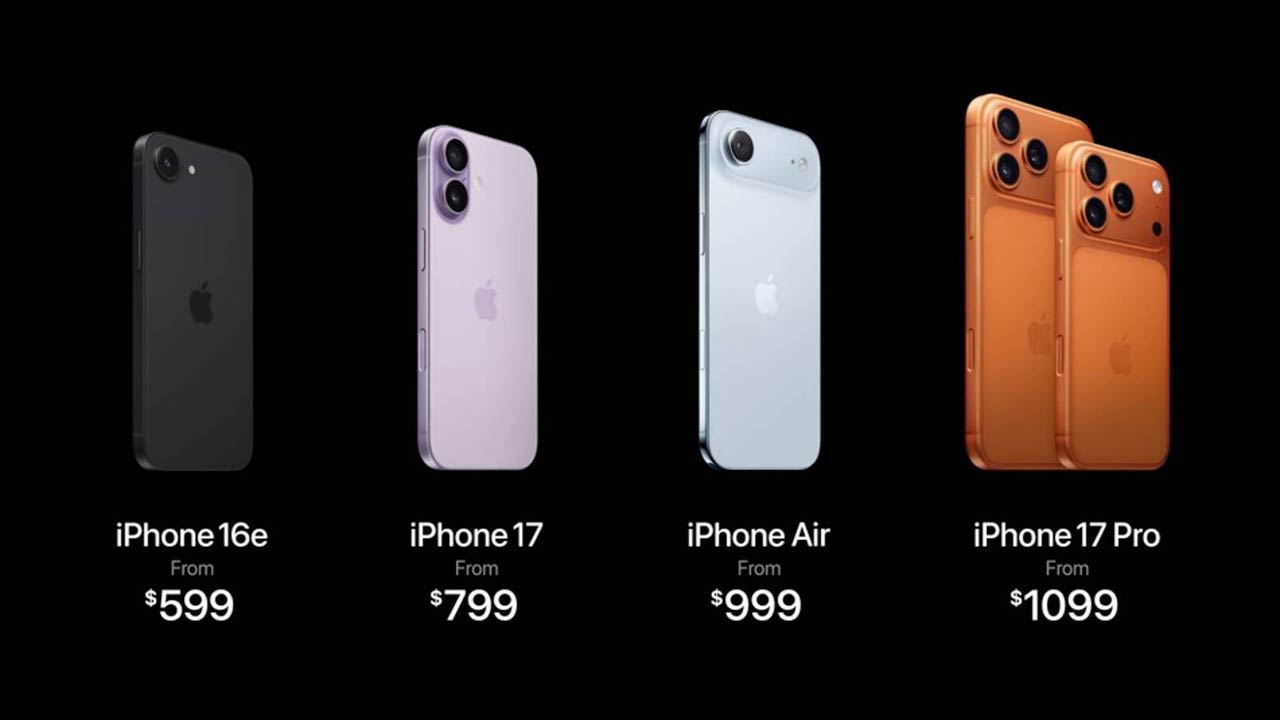
The event’s supposed star was the iPhone Air, measuring just 5.6mm thick – thinner than the iPhone 6’s previous record of 6.9mm. Apple achieved this feat by giving the Air a single 48MP camera, a smaller battery, and fewer features than the Pro models. It’s positioned as a mid-tier device at $999, replacing the unpopular iPhone Plus line.
The Air perfectly embodies Apple’s current strategy: sacrifice functionality for aesthetics, then market the compromises as choices. The strategy seems a little flawed.
A Little Common Sense
When Apple called out its vapor chamber cooling system as new, it was obvious that innovation had left the building. Tim Cook called it “the biggest leap ever for iPhone,” but that might be a little overstated.
The iPhone 17 lineup goes on sale September 19, starting at $799 for the base model. Pre-orders begin Friday, giving consumers three days to decide if a little bit more of the same is worth another four-figure investment.
Author’s note: This is not a sponsored post. I am the author of this article and it expresses my own opinions. I am not, nor is my company, receiving compensation for it. This work was created with the assistance of various generative AI models.
About Shelly Palmer
Shelly Palmer is the Professor of Advanced Media in Residence at Syracuse University’s S.I. Newhouse School of Public Communications and CEO of The Palmer Group, a consulting practice that helps Fortune 500 companies with AI strategy, implementation and governance, as well as technology, media and marketing. Named one of LinkedIn’s Top Voices in Technology, he is a bestselling author, covers tech and business for Fox 5’s Good Day New York, is a regular commentator on CNN, and writes the popular daily business blog Think About This. Follow @shellypalmer or visit shellypalmer.com.