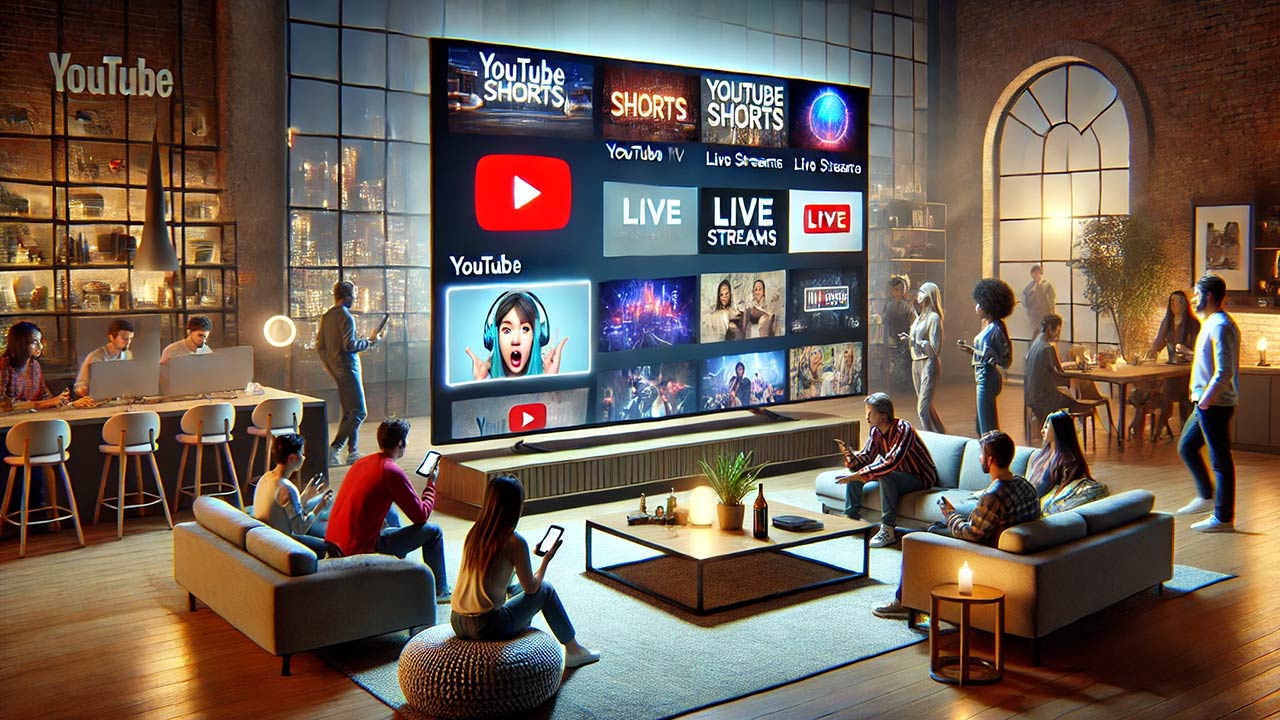
Technology is meaningless unless it changes the way we behave. Shortly after it launched, YouTube changed the way we consumed video. It grew powerful in tandem with the evolution of smartphones as it redefined our video viewing experiences. Now, YouTube has transcended its original form factors to officially become a television-first platform. CEO Neal Mohan revealed that viewers now watch more than 1 billion hours of content on their TVs every day, surpassing mobile viewing. For the past two years, YouTube has been the most-watched streaming service in the U.S., according to Nielsen.
The shift toward TV screens is no accident. YouTube has redesigned its TV app to function more like a traditional streaming service. Users can now pull up video comments and descriptions alongside playback, navigate episodic content through seasonal organization, and use the Watch With feature for real-time commentary on live events.
Mohan emphasized that today’s television experience isn’t limited to legacy programming. “The ‘new’ television doesn’t look like the ‘old’ television,” he wrote, highlighting how YouTube Shorts, podcasts, and live streams are now watched alongside sports, sitcoms, and talk shows.
Meanwhile, YouTube’s paid services continue to expand. YouTube TV now has more than 8 million subscribers, and YouTube Premium and Music subscriptions have surpassed 100 million (including trials). Mohan says YouTube will enhance features like Key Plays and multiview for YouTube TV subscribers while adding new perks for YouTube Premium users.
YouTube is also making significant AI-driven updates. Auto-dubbing—a tool that generates translated audio tracks—has expanded to hundreds of thousands of channels, making content accessible in multiple languages, including French, German, Hindi, and Japanese. Additionally, YouTube is rolling out AI-powered age-identification technology to ensure age-appropriate content delivery.
With a growing presence on the biggest screen in the house and AI-driven innovations enhancing content accessibility, YouTube is positioned – once again – to change the way we behave.
Author’s note: This is not a sponsored post. I am the author of this article and it expresses my own opinions. I am not, nor is my company, receiving compensation for it. This work was created with the assistance of various generative AI models.
About Shelly Palmer
Shelly Palmer is the Professor of Advanced Media in Residence at Syracuse University’s S.I. Newhouse School of Public Communications and CEO of The Palmer Group, a consulting practice that helps Fortune 500 companies with AI strategy, implementation and governance, as well as technology, media and marketing. Named one of LinkedIn’s Top Voices in Technology, he is a bestselling author, covers tech and business for Fox 5’s Good Day New York, is a regular commentator on CNN, and writes the popular daily business blog Think About This. Follow @shellypalmer or visit shellypalmer.com.