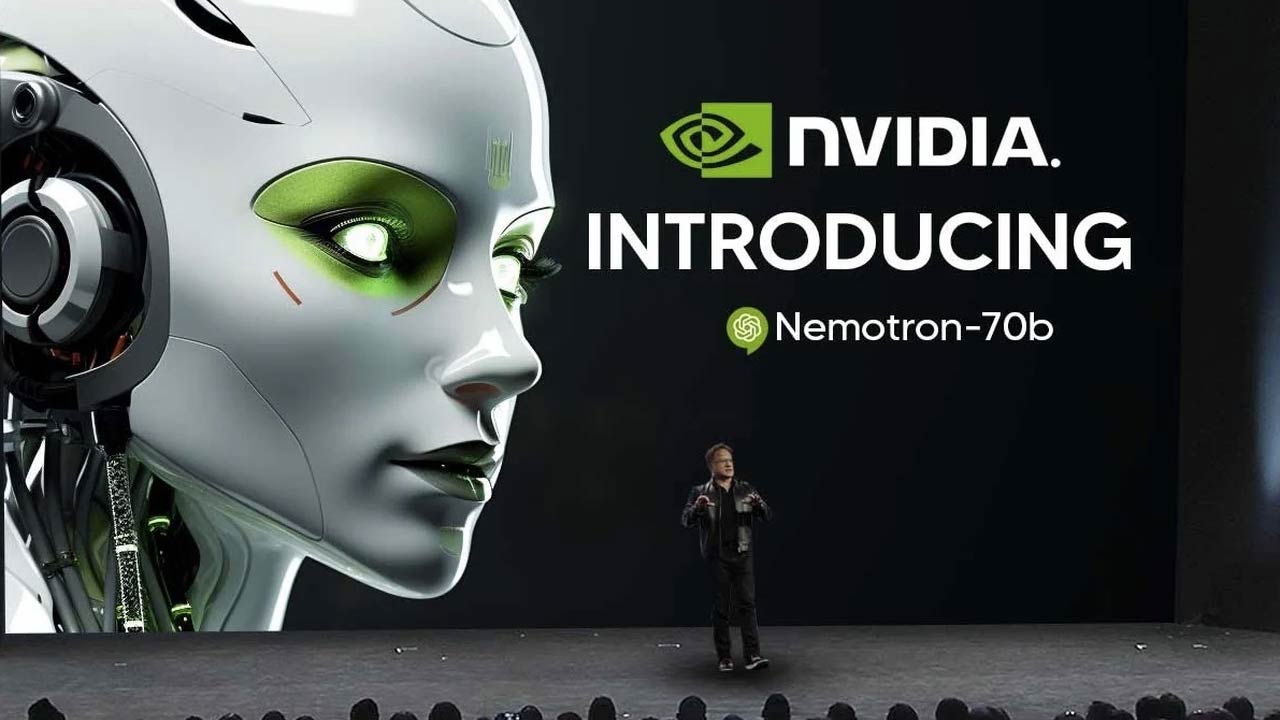
Last week, NVIDIA quietly unveiled a variation of Meta’s Llama 3.1 model called “Llama-3.1-Nemotron-70B-Instruct.” I didn’t expect the shockwaves it sent through the AI industry, thanks to its superior performance compared to established models like OpenAI’s GPT-4o and Anthropic’s Claude 3.5 Sonnet. The new model’s impressive benchmark scores – 85.0 on Arena Hard, 57.6 on AlpacaEval 2 LC, and 8.98 on GPT-4-Turbo MT-Bench – underscore NVIDIA’s potential to compete in the AI arms race, which is traditionally led by software-centric companies.
NVIDIA’s strategy is clear: by merging hardware prowess with cutting-edge AI software, the company is positioning itself as a full-service AI provider. This new direction not only elevates NVIDIA as a serious AI competitor but also forces industry giants to rethink their approaches. It’s time for the “disrupt the disruptors” phase of our AI journey; of course it’s being brought to us by NVIDIA. You can experiment with the model at build.nvidia.com or on Hugging Face.
Author’s note: This is not a sponsored post. I am the author of this article and it expresses my own opinions. I am not, nor is my company, receiving compensation for it. This work was created with the assistance of various generative AI models.
About Shelly Palmer
Shelly Palmer is the Professor of Advanced Media in Residence at Syracuse University’s S.I. Newhouse School of Public Communications and CEO of The Palmer Group, a consulting practice that helps Fortune 500 companies with AI strategy, implementation and governance, as well as technology, media and marketing. Named one of LinkedIn’s Top Voices in Technology, he is a bestselling author, covers tech and business for Fox 5’s Good Day New York, is a regular commentator on CNN, and writes the popular daily business blog Think About This. Follow @shellypalmer or visit shellypalmer.com.