The wait is over for OpenAI’s open‑weight models. For the first time since GPT‑2, OpenAI is giving developers access to the raw model weights. No API, no cloud dependency, no rate limits, and no vendor lock-in. You download them. You run them. You own the infrastructure. After five years of locking things behind an endpoint, OpenAI has released gpt‑oss‑120b and gpt‑oss‑20b under an Apache 2.0 license. Continue Reading →
Reports surfaced this week on social media suggesting that OpenAI is reportedly testing internally a “router” function that automatically selects the best model from their growing stable of options based on what you’re asking for. No more staring at a dropdown menu wondering whether your medical question needs the reasoning power of o3 or if GPT-4o will suffice. Continue Reading →
Both OpenAI and Google DeepMind announced gold-medal performances at the 2025 International Math Olympiad (IMO) this week, correctly answering five out of six questions in one of the world's most challenging high school math competitions. The achievement marks a significant leap from Google's silver-medal performance last year and represents the first time AI systems competed using "informal" methods (processing questions in natural language) rather than requiring human translation into machine-readable code. Continue Reading →
Yesterday, OpenAI launched ChatGPT agent, which combines everything OpenAI has learned about autonomous systems. It can click through websites like Operator; synthesize research like Deep Research; and access your Gmail, GitHub, and calendar to complete real tasks. It's available today for Pro, Plus, and Team subscribers through a simple dropdown menu selection. Continue Reading →
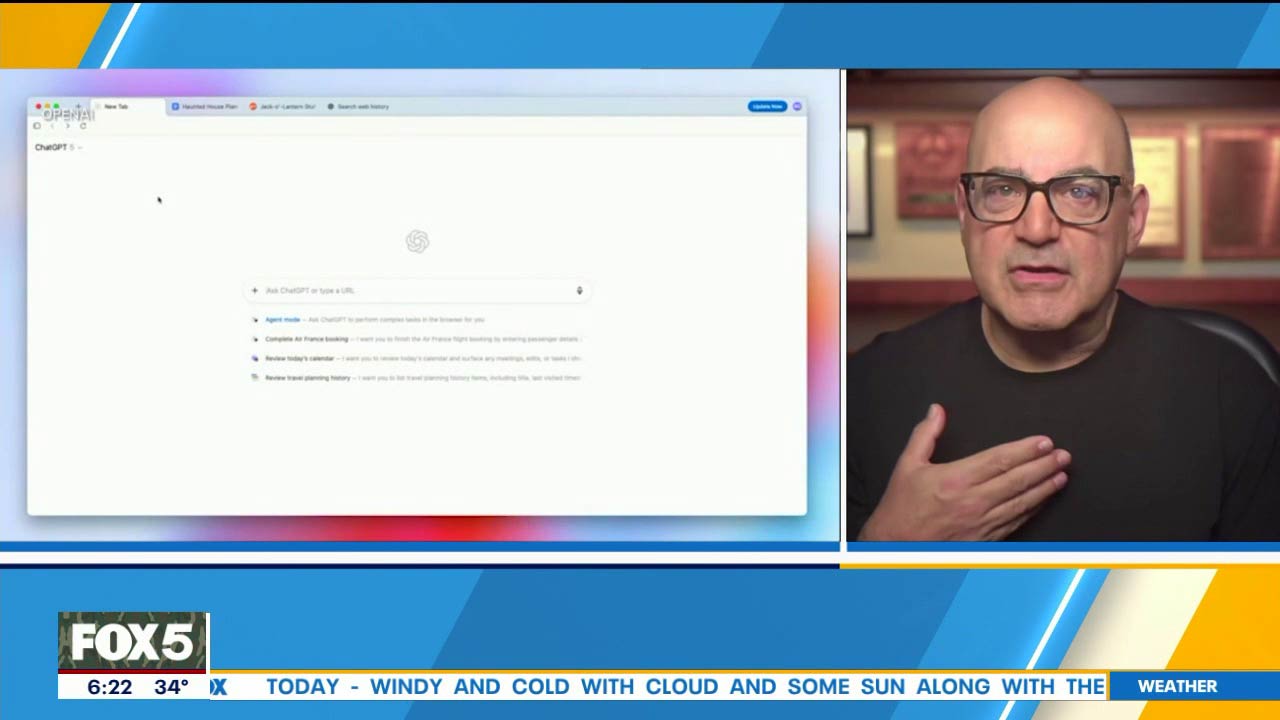
The browser wars just got interesting. Reuters reported yesterday that OpenAI is launching an AI-powered web browser in the coming weeks. Three sources familiar with the matter told Reuters that OpenAI will integrate ChatGPT directly into browsing, letting AI agents fill out forms, book reservations, and handle tasks without clicking through to websites. Continue Reading →
This week has been full of hands-on AI experiments. Yesterday, we built a web-based “Yiddish Curse Generator” in under 10 minutes by simply describing it to Claude Code. Today, we’re hunting for Prime Day deals, not by browsing Amazon, but by asking ChatGPT (or any AI platform with web access) to find exactly what we want. Continue Reading →
If you've been following the The New York Times Company v. Microsoft Corporation (1:23-cv-11195) case, you may wake up this morning worrying that New York Times lawyers will soon comb through your late‑night ChatGPT confessions. Breathe easy – they almost certainly will not. Continue Reading →