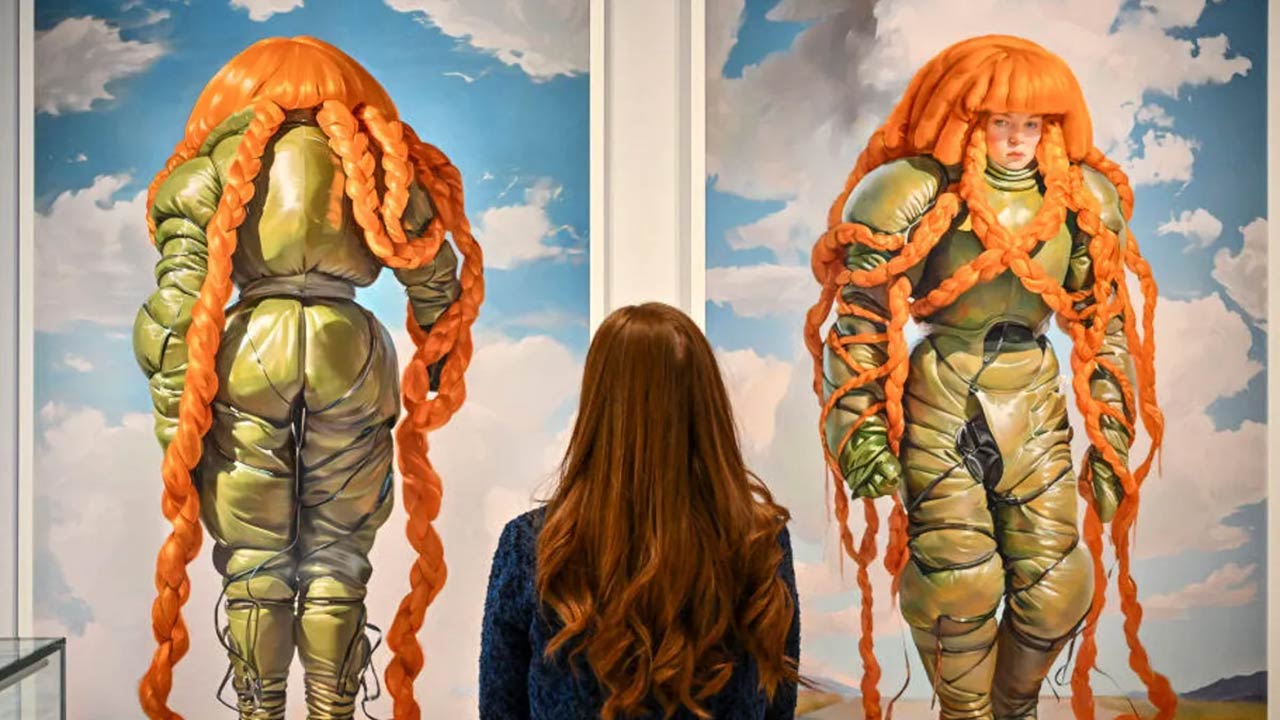
More than 6,000 artists signed an open letter calling on Christie’s to cancel its Augmented Intelligence AI-generated art auction, arguing it threatened their livelihoods. The auction was held anyway and brought in more than $728,000.
This is “the” issue for everyone with a body of work that can be found online. Every publisher, every content creator, everyone whose works can be found on the public web has contributed to the training of every foundational model. There are very few exceptions.
The primary grievance revolves around the fact that this training was done without permission or compensation, but there’s an irony here worth exploring — everyone learns their craft by studying and emulating the styles and techniques of previous craftspersons (artists, musicians, writers, and artisans alike). Traditionally, such imitation hasn’t warranted financial compensation or sparked significant protest. Competition among artists has always existed; the presence of a new competitor (AI) doesn’t fundamentally alter that reality.
What’s distinct about AI-generated art isn’t merely competition; it’s scale and efficiency. AI can rapidly assimilate and mimic artistic styles from thousands of works in ways human artists cannot practically achieve, yet the artists signing the letter don’t typically seek royalties from human peers who study or replicate their techniques. Is the objection rooted in fear that AI-generated works might ultimately surpass human capabilities? That AI art may be more commercially desirable? Cheaper? Easier to obtain?
This debate highlights a core economic and philosophical question: Should creators be compensated for their contribution to AI training datasets, even if humans have freely studied and learned from their predecessors for centuries without explicit financial transactions? The artists’ demand is clear—they sought either cancellation of the auction or remuneration for their unintended role as AI trainers.
Christie’s ignored the letter, but this issue is not going away. Everyone has very big feelings about this. I know I do. Foundational models have assimilated more than 2 million of my words and hundreds of my musical compositions from the public web. Who do I see about that? Who does anyone see?
Author’s note: This is not a sponsored post. I am the author of this article and it expresses my own opinions. I am not, nor is my company, receiving compensation for it. This work was created with the assistance of various generative AI models.
About Shelly Palmer
Shelly Palmer is the Professor of Advanced Media in Residence at Syracuse University’s S.I. Newhouse School of Public Communications and CEO of The Palmer Group, a consulting practice that helps Fortune 500 companies with AI strategy, implementation and governance, as well as technology, media and marketing. Named one of LinkedIn’s Top Voices in Technology, he is a bestselling author, covers tech and business for Fox 5’s Good Day New York, is a regular commentator on CNN, and writes the popular daily business blog Think About This. Follow @shellypalmer or visit shellypalmer.com.