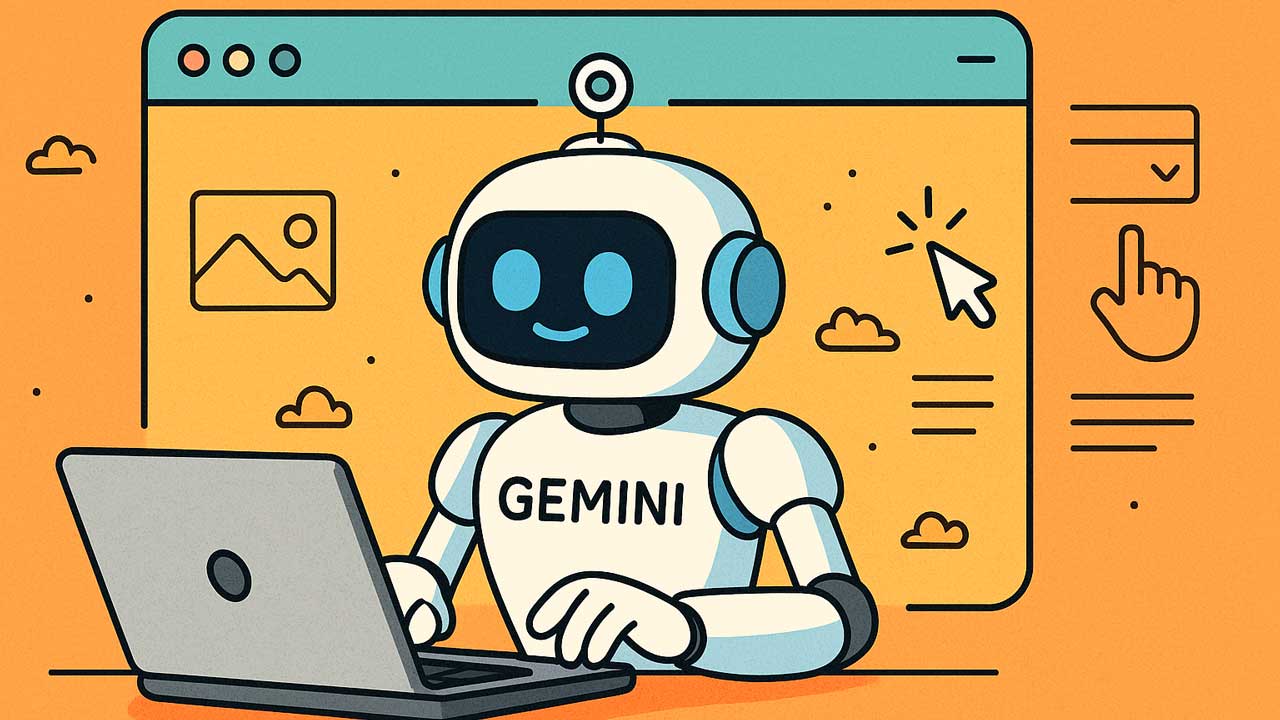
Google introduced a new model called Gemini 2.5 Computer Use, which gives it the ability to operate a web browser the same way a person does. The model can click, scroll, and type inside a browser window to access information that is not available through an API. It can navigate live websites, interact with forms, pull data, and execute tasks across the open web, which means it can collect pricing information, perform research, complete transactions, and update systems that were not designed for AI access.
Google demonstrated the model filling and submitting forms, updating a CRM, and reorganizing an online board, all from a live browser session. The system maintains context, interprets page layouts, and handles dynamic content such as menus and forms. These capabilities allow it to complete full workflows without needing custom connectors or manual supervision. It is available in public preview through Google AI Studio and Vertex AI.
To me, the demo looked like RPA on steroids. You have seen the trick before, but not with AI. Companies that depend on manual data entry, copy-paste workflows, or simple online research, but have not had the budget or ability to deploy RPA solutions will probably like this a lot.
In practice, this is an additional way to scope an AI pilot. Instead of waiting for API-level access or vendor partnerships, teams can design workflows that let an AI agent complete tasks through the same interfaces employees already use. This lowers technical barriers, but raises new governance issues. Computer-use agents will require controls for authentication, audit logs, and data boundaries. Google includes per-step safety reviews and requires user confirmation for high-risk actions such as purchases.
Agents are evolving quickly. They can already read, write, and analyze. Now they can navigate and act. It’s a powerful combination.
Author’s note: This is not a sponsored post. I am the author of this article and it expresses my own opinions. I am not, nor is my company, receiving compensation for it. This work was created with the assistance of various generative AI models.
About Shelly Palmer
Shelly Palmer is the Professor of Advanced Media in Residence at Syracuse University’s S.I. Newhouse School of Public Communications and CEO of The Palmer Group, a consulting practice that helps Fortune 500 companies with AI strategy, implementation and governance, as well as technology, media and marketing. Named one of LinkedIn’s Top Voices in Technology, he is a bestselling author, covers tech and business for Fox 5’s Good Day New York, is a regular commentator on CNN, and writes the popular daily business blog Think About This. Follow @shellypalmer or visit shellypalmer.com.