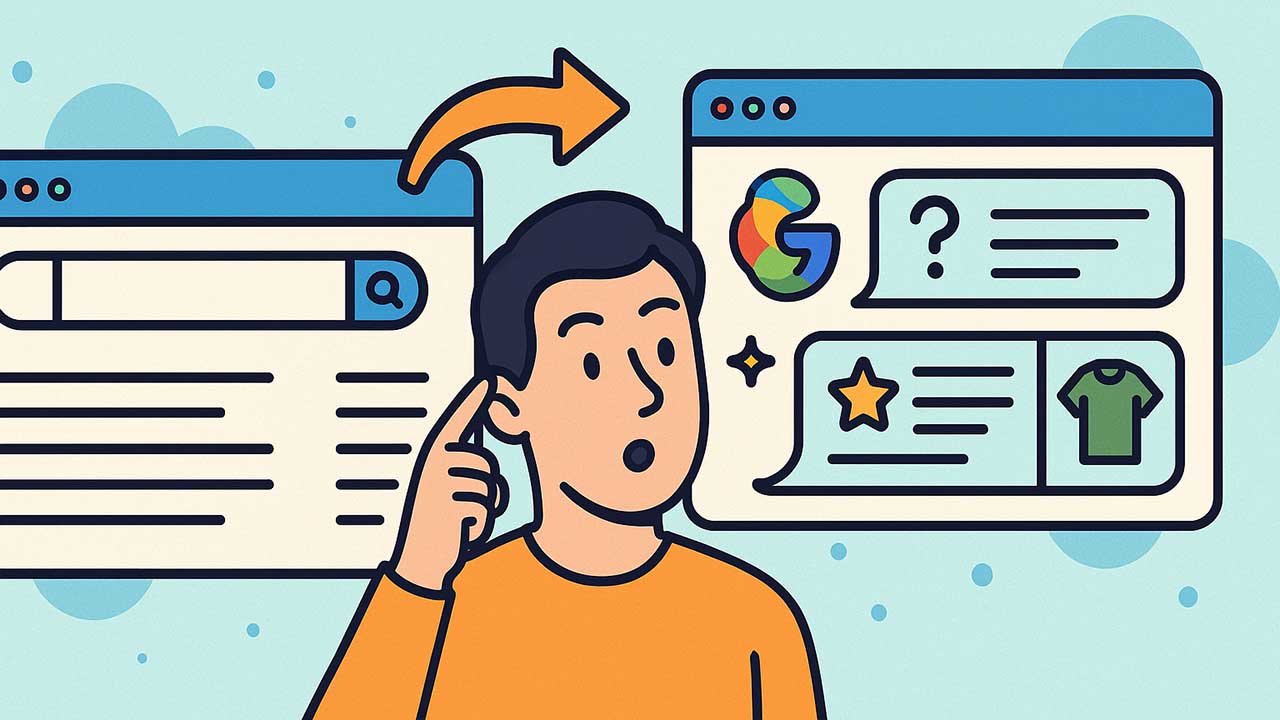
The transition from SEO to AEO is underway. The idea is simple. Instead of optimizing for a list of links, you optimize for answer engines such as Google Gemini, AI Overviews, Chrome’s AI Mode, and ChatGPT Search which decide which pages to cite, which brands to mention, and which products to present when responding to user questions in natural language.
As best anyone can tell, this requires your brand story and user journey to be “machine-readable.” Google, OpenAI, and others keep their selection criteria proprietary. Still, industry experts agree on some best practices. Clean, consistent facts expressed in structured data and corroborated by external sources give you the best shot at being cited in AI-generated answers. Let’s explore.
Quick note: As a non-technical executive, you’re going to think that this “code block” doesn’t concern you. If web traffic is important to your business, this is as close to a “must read” as I have ever written.
The Key to AEO
At the center of AEO is JSON-LD, which stands for JavaScript Object Notation for Linked Data. Think of it as a way to publish a fact sheet for machines inside your webpage.
Here’s how it works:
- Add a small block of JSON inside a
<script type="application/ld+json">tag on your page. - Use the Schema.org vocabulary, a shared dictionary of terms like “Organization,” “Product,” “FAQ,” and “Article.”
- Give each real-world entity a stable
@id, usually a URL, which acts like its passport number. That@idlinks your entities together across your site and disambiguates them for answer engines. - Include a
sameAslist of links to external authoritative profiles (LinkedIn, Wikipedia, Wikidata), which strengthens the trust signal.
Here’s a minimal example showing how an organization and a product can be linked:
<script type="application/ld+json">
{
  "@context": "https://schema.org",
  "@type": "Organization",
  "@id": "https://example.com/#org",
  "name": "Example Corp",
  "url": "https://example.com",
  "logo": "https://example.com/logo.png",
  "sameAs": [
    "https://www.wikidata.org/entity/Q123456",
    "https://www.linkedin.com/company/example",
    "https://en.wikipedia.org/wiki/Example_Corp"
  ]
}
</script>

<script type="application/ld+json">
{
  "@context": "https://schema.org",
  "@type": "Product",
  "@id": "https://example.com/products/widget-200/#product",
  "name": "Widget 200",
  "description": "Lightweight widget for creators.",
  "sku": "W200",
  "brand": { "@id": "https://example.com/#org" },
  "offers": {
    "@type": "Offer",
    "priceCurrency": "USD",
    "price": "199.00",
    "availability": "https://schema.org/InStock",
    "url": "https://example.com/products/widget-200/"
  }
}
</script>
Importantly: This markup doesn’t change what human visitors see, but it makes your entities crystal-clear to machines.
An Important Note on Security
Experts will tell you about the dangers of JSON injection attacks. This is a known issue. If your site builds JSON-LD dynamically from untrusted inputs such as concatenating user reviews, form fields, or third-party data without sanitization, you can create a security vulnerability where attackers insert misleading or malicious data into your markup potentially confusing search engines, polluting your brand graph, or breaking page rendering.
The solution is straightforward and well-understood. The industry consensus is that JSON-LD is safe when treated like a production data feed, not freeform text. With proper governance, the benefits for AEO outweigh the risks.
(For geeks: generate JSON-LD server-side from trusted systems of record (your CMS, PIM, or ERP). Whitelist the fields you allow, sanitize any text that comes from users, and validate every JSON-LD blob against Schema.org and your internal schema before you ship it. Add Content Security Policy (CSP) headers, keep HTTPS everywhere, and monitor your structured data output for unexpected changes. If you want an extra layer of control, you can host JSON-LD as static .jsonld files on your domain or use Microdata/RDFa attributes inline in your HTML. These alternatives are less flexible but can reduce risk by keeping facts closer to visible content.)
How the Major Systems Work
Google Gemini and AI Overviews
AI Overviews sit at the top of search results, presenting synthesized answers with citations. Gemini, Google’s large language model, powers these summaries. Google says structured data and technically sound pages are more likely to be included (Google Search Central).
Chrome AI Mode
AI Mode brings answer generation into Chrome itself. Users type questions into the omnibox, and Chrome interprets the page and suggests contextual answers (Google Support). Clear, structured facts improve your chances of appearing.
OpenAI ChatGPT Search
ChatGPT Search retrieves live web results and cites sources inline (OpenAI). Publishers with crawlable, current, trustworthy pages can be cited directly. OpenAI also provides documentation for exposing content to its OAI-SearchBot (OpenAI SearchBot Guide).
Best Practices for AEO
- Use JSON-LD. Define entities with
@idand link them across your site. - Generate securely. Build server-side, sanitize inputs, validate before deployment.
- Consistency. Match markup to visible content.
- Authority. Add
sameAslinks to trusted external profiles. - Freshness. Automate updates to keep facts current.
- Crawlability. Serve fast, accessible HTML.
- Answer-first writing. Lead with the answer, then expand.
- Attribution. Include bylines, dates, abstracts.
- Monitoring. Track when your content appears in AI Overviews or ChatGPT citations.
Should You Do This Now?
Preparing for AEO by adapting your websites is going to require resources and some new workflows. Implementing AEO means updating templates, maintaining JSON-LD across thousands of pages, validating constantly, and coordinating security with your engineering teams. For many organizations, this investment will feel premature. After all, we don’t yet know exactly how Gemini, AI Overviews, or ChatGPT Search decide what to cite, and Google and OpenAI can (and will) change the rules at any time.
Still, the direction of travel is obvious. According to Google’s documentation, structured data and content clarity increase your chance of inclusion in AI features. OpenAI explicitly encourages publishers to expose their content for ChatGPT Search. So, if search is a critical acquisition channel for your brand, the answer is yes. The behind-the-scenes work may be invisible, but the cost of AEO invisibility will be higher.
Author’s note: This is not a sponsored post. I am the author of this article and it expresses my own opinions. I am not, nor is my company, receiving compensation for it. This work was created with the assistance of various generative AI models.
About Shelly Palmer
Shelly Palmer is the Professor of Advanced Media in Residence at Syracuse University’s S.I. Newhouse School of Public Communications and CEO of The Palmer Group, a consulting practice that helps Fortune 500 companies with AI strategy, implementation and governance, as well as technology, media and marketing. Named one of LinkedIn’s Top Voices in Technology, he is a bestselling author, covers tech and business for Fox 5’s Good Day New York, is a regular commentator on CNN, and writes the popular daily business blog Think About This. Follow @shellypalmer or visit shellypalmer.com.