Curiosity
Imagine a nuclear powered machine that travels nine months and more than 350 million miles through the galaxy. Upon arriving at its target planet, the 2,000-pound machine suddenly hurtles downward in a guided entry pattern, in a period called “The Seven Minutes of Terror,” enduring temperatures as high as 3,800 degrees… Just milliseconds before landing, Continue Reading →
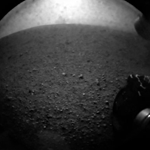
[wpaudio url=”https://media.shellypalmer.com/wp-content/images/usrn/120807_SHELLYPALMER_GEN_BED.mp3″ text=”Click to play … ” dl=”0″] NASA’s new Mars rover, Curiosity, has finally landed on the red planet, after over 14 years of planning. The project, which cost 2.5 billion dollars, had seen years of launch delays and problems with funding. But landing on Mars is no easy task. Many previous missions have Continue Reading →
Curiosity on Mars
At 1:31 a.m. Eastern time on Monday, NASA’s Mars Curiosity rover completed its eight-and-a-half-month journey from Earth to land on the surface of Mars. The Times is reporting the news as it unfolds directly from NASA’s Jet Propulsion Laboratory, and covering events and reaction from people tuning in around the globe. There are several transmitters on Continue Reading →
Reductionism
Scientists at Stanford University and the J. Craig Venter Institute have developed the first software simulation of an entire organism, a humble single-cell bacterium that lives in the human genital and respiratory tracts. – NY Times article 7/20/2012 When you are done reading below, take a minute or two to read the NY Times article on Continue Reading →
Brittany Wenger
An artificial “brain” built by a 17-year-old whiz kid from Florida is able to accurately assess tissue samples for signs of breast cancer, providing more confidence to a minimally invasive procedure. The cloud-based neural network took top prize in this year’s Google Science Fair. “I taught the computer how to diagnose breast cancer,” Brittany Wenger, Continue Reading →
Earth
Looking at her picture, you may think that Earth is a water world. But the fact is that she is 99-percent dry rock. According to our current solar system formation model, this is impossible—a mystery that has puzzled scientists until now. Rebecca Martin and Mario Livio—of the Space Telescope Science Institute in Baltimore, Maryland—may have Continue Reading →
Moon
Sci-fi fantasies have long predicted that we might live on the moon. But while the lack of atmosphere poses a problem for lunar living, there may be an even bigger sticking point: new research suggests that the moon’s surface is itself toxic to humans. For obvious reasons, long-term human exposure to the moon’s environment has Continue Reading →
Project 1640
It’s taken more than six years of development, but a new imaging system for the Palomar Observatory’s 200-inch Hale Telescope finally started capturing images last month, and promises to aid significantly in the search for planets outside our solar system (otherwise known as exoplanets). With the suitably mysterious name of “Project 1640,” the new instrument Continue Reading →