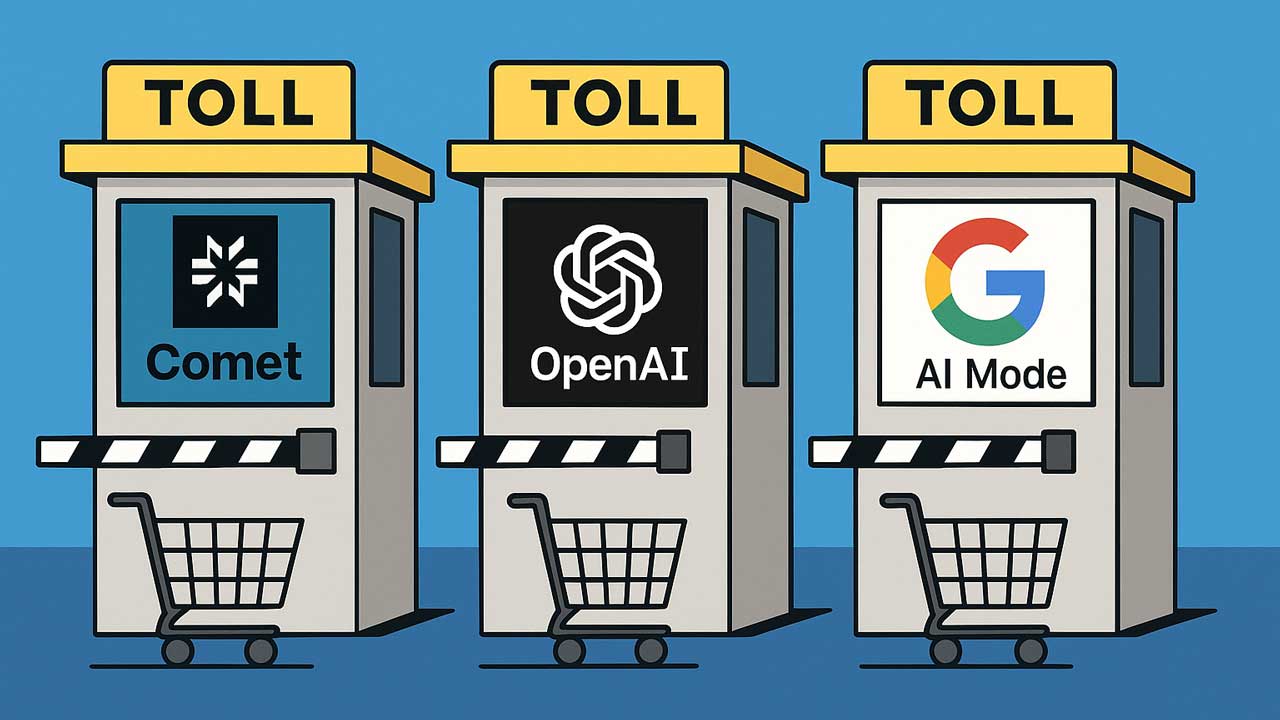
Three companies have declared war on how you use the internet. Perplexity AI launched Comet, its AI-powered browser, in July 2025. OpenAI released Atlas on October 21, promising a future where AI handles your web tasks autonomously. Google then responded by expanding agentic capabilities in Chrome through “AI Mode” in early November. We can call these new hybrid interfaces, “agentic browsers.” They can shop, book appointments, and navigate websites on your behalf.
Amazon didn’t wait long to respond. On October 31, Amazon sent a cease and desist letter to Perplexity alleging Comet violated Amazon’s terms of service by allowing users to make purchases through Amazon without authorization. The letter contended that Perplexity’s approach creates a “significantly degraded shopping and customer service experience.” When Amazon tried to block the bots, Perplexity released a new version to bypass the security measures.
What Are Agentic Browsers?
Agentic browsers use AI to perform web tasks autonomously on behalf of users, including shopping, booking appointments, and comparing products across multiple sites. Built on Chromium (the open-source engine behind Chrome), these browsers can click, scroll, type, and complete purchases while users focus on other tasks.
- Perplexity Comet – (Free for all users) Promises to compare products across sites and complete purchases for you.
- OpenAI Atlas – Launched on October 21, 2025, for macOS users at all subscription tiers. Atlas features an “Ask ChatGPT” sidebar that remembers context from sites you visit. Its agent mode can research topics, automate tasks, and plan events while you browse. OpenAI’s 800 million ChatGPT users gained instant access to agentic browsing capabilities. Atlas is free, but agent mode requires a Plus, Pro, or Business subscription.
- Google Chrome AI Mode – Expanded to Android and iOS on November 5, 2025, reaching 160 new countries and adding support for Hindi, Indonesian, Japanese, Korean, and Portuguese. No agentic capabilities just yet, but the feature roadmap has been announced. With an estimated 3.5 billion daily Chrome users worldwide, when Chrome’s agentic features are live, everything we think we know about using the web will change.
Why Amazon Really Cares
Amazon’s issue with Perplexity isn’t just about unauthorized access. Agentic browsers threaten Amazon’s lucrative advertising business. When shoppers search on Amazon, they see sponsored product placements. That’s how Amazon makes most of its advertising revenue. If AI agents shop for customers, those ad placements lose their value. An agent doesn’t care about promoted listings. It optimizes for the user’s actual preferences.
Agentic browsers won’t just search Amazon. The more you use a shopping agent, the more it learns your buying habits. It compares prices across dozens of retailers, factors in shipping costs and return policies, and finds the best overall deal. This will either level the playing field for all online retailers or favor those who pay. We can all guess where this is going. Retailers with the biggest budgets will pay for placement in agent recommendations, just like they do in Google search results.
Consumer Behavior vs. The New Reality
Changing consumer behavior is hard. People adopt new shopping methods only when the value is undeniable. Right now, agentic browsing feels like automation for automation’s sake. Comet might put an item in your Amazon cart, but you already know how to buy on Amazon.
The current friction point is making decisions, not clicking buttons. Which product solves your problem? Which seller is reliable? What reviews should you trust? These early agents automate clicking and searching while the hard decision-making problems remain unsolved.
This will not be the case for long. The agents will get better at decision-making. They’ll learn your preferences, understand your budget constraints, and optimize across dozens of variables you don’t have time to consider. When that happens, a new problem emerges for retailers: how do you get agents to recommend your products?
The New New Thing: Agentic Commerce Optimization
Agentic Commerce Optimization (ACO) refers to optimizing your product catalogs, descriptions, and digital presence for AI shopping agents rather than human searchers. Nobody agrees on the acronym yet—AO? ACO? Pick one. Only the results matter.
AI search and AI-browser traffic figures are circulating widely, but treat them cautiously until confirmed. According to some reports citing Adobe Analytics, traffic to U.S. retail sites from GenAI browsers increased 4,700 percent year over year in July 2025. These AI-directed visitors spent 32 percent more time on site and viewed 10 percent more pages. McKinsey estimates that agentic commerce could generate up to $1 trillion by 2030. If even half of consumers use AI assistants for shopping by the end of 2025, ACO won’t be optional.
We’ve spent years optimizing for Google’s search algorithm. Now we must optimize for agentic commerce. Agents don’t care about your marketing copy. They care about structured product data, clear specifications, competitive pricing, and reliable fulfillment. Your SEO playbook won’t work here. Agents prioritize machine-readable specs, API integrations, structured data over branding and copywriting.
The agents are coming for commerce. Will you be ready when they arrive?
Author’s note: This is not a sponsored post. I am the author of this article and it expresses my own opinions. I am not, nor is my company, receiving compensation for it. This work was created with the assistance of various generative AI models.